Abstract
Drawing from a broader dissertation study (Judge-Stasiak, 2024), this article specifically examines the supervision component of an innovative self-directed practicum model implemented at a Canadian faculty of social work as an alternative to traditional agency-based field placements. By examining the perspectives of eight students and seven supervisors, this research seeks to comprehensively understand the dynamics of self-directed learning within real-world practice settings. Emphasis is placed on exploring the essential role of practicum supervision in fostering and supporting the development of students. The findings illuminate participants’ perspectives on how effective supervision of self-directed practicum can support the acquisition of knowledge and skills by students, contributing to the development of their professional identity and future practice. This study contributes to the field by providing novel insights into the complexities of practicum supervision, and offers recommendations for enhancing educational practices to cultivate compassionate, reflective, and self-directed social workers.
Keywords: Self-directed learning, experiential learning, practicum supervision, promising practices, reflective practice, ethical practice, professional identity
This article draws from a larger dissertation study that explored the learning experiences of self-directed social work practicum students (Judge-Stasiak, 2024). While the dissertation examined multiple dimensions of self-directed learning, including student experiences, learning activities, and professional identity development, this article focuses specifically on the supervision component, examining student and supervisor perspectives on how supervision functions within this alternative practicum model. By narrowing the focus to supervision, this article provides in-depth analysis of the supervisory relationship dynamics, group and individual supervision structures, and unique challenges and affordances of supervising self-directed learners.
This model was first implemented in 2019 to address the growing challenges in field education while maintaining alignment with national accreditation standards (Archer-Kuhn et al., 2022). The model offers one approach to how social work programs can provide flexible learning opportunities while aiming to ensure professional supervision and competency development, aligning with the emphasis in the Canadian Association of Social Workers (CASW) Code of Ethics on competence and lifelong learning (Canadian Association of Social Workers [CASW], 2024). Field education, also known as practicum, is widely recognized as the signature pedagogy of social work education, and faces significant challenges in contemporary contexts (Fulton et al., 2019). The faculty implemented the supervised, self-directed practicum as a pilot in winter 2019 in response to increased competition for placements in both urban and rural settings, the pressures (including working and caregiving responsibilities) on students who choose online programs, and the community’s capacity to support some but not all the required practicum hours (Archer-Kuhn et al., 2022; Drolet et al., 2021).
The practicum model continues to evolve annually, informed by feedback from social work students, alumni, and field instructors (Mann-Johnson, Judge-Stasiak, et al., 2024). Communities face ongoing challenges in coordinating field placements due to reduced staffing, limited funding, and increasing practice complexity (Walsh et al., 2023). A national study on transforming field education emphasized the importance of understanding historical and current contexts and prioritizing excellence and student-centered learning, and called for transformation in social work education practices (Drolet et al., 2021, 2022). This call to action urges social work field educators to consider alternative learning models while maintaining the rigor and learning objectives essential for future practitioners. Self-directed practicum represents one such innovation, making it crucial to understand supervisory perspectives on this model.
The Self-Directed Practicum Model: Structure and Philosophy
The self-directed practicum represents an alternative approach to field education that emerged in response to persistent challenges in traditional agency-based placements, particularly for students in rural, remote, and highly competitive urban areas. Rooted in foundational social work values of self-determination and social justice, this model positions students as capable, knowledgeable agents in their own learning while maintaining rigorous supervision and professional accountability structures. Rather than positioning students within predetermined agency contexts, the self-directed practicum invites students to design learning experiences that align with their professional interests, community needs, and commitment to antioppressive practice (Baines, 2017; Drolet et al., 2022). All students, including self-directed practicum students, are guided by the practicum learning objectives to obtain intentional, supervised, and evaluated learning in practical, applied ways to integrate theory into practice actions.
This model draws from critical social work theory with an emphasis on social justice and resistance to traditional dyad or hierarchical supervision models (Asakura et al., 2020; Baines, 2017; Brown, 2020; Drolet et al., 2021; Kaushik et al., 2023). By centering student agency and self-determination, the approach reflects what Freire (2017) described as problem-posing education, where learners are active participants in knowledge creation rather than passive recipients of predetermined curricula. The model recognizes students as holders of knowledge about their own communities, learning needs, and social justice issues they are called to address. As Archer-Kuhn et al. (2022) explained, “The supervised, self-directed model for field education allowed for an enactment of our social work values of self-determination and social justice, whereby students were provided with a choice about their learning and encouragement to drive their own learning process” (p. 538).
The self-directed practicum model incorporates several essential elements, as shown in Figure 1.
Figure 1
Self-Directed Practicum Learning Experiences for Students
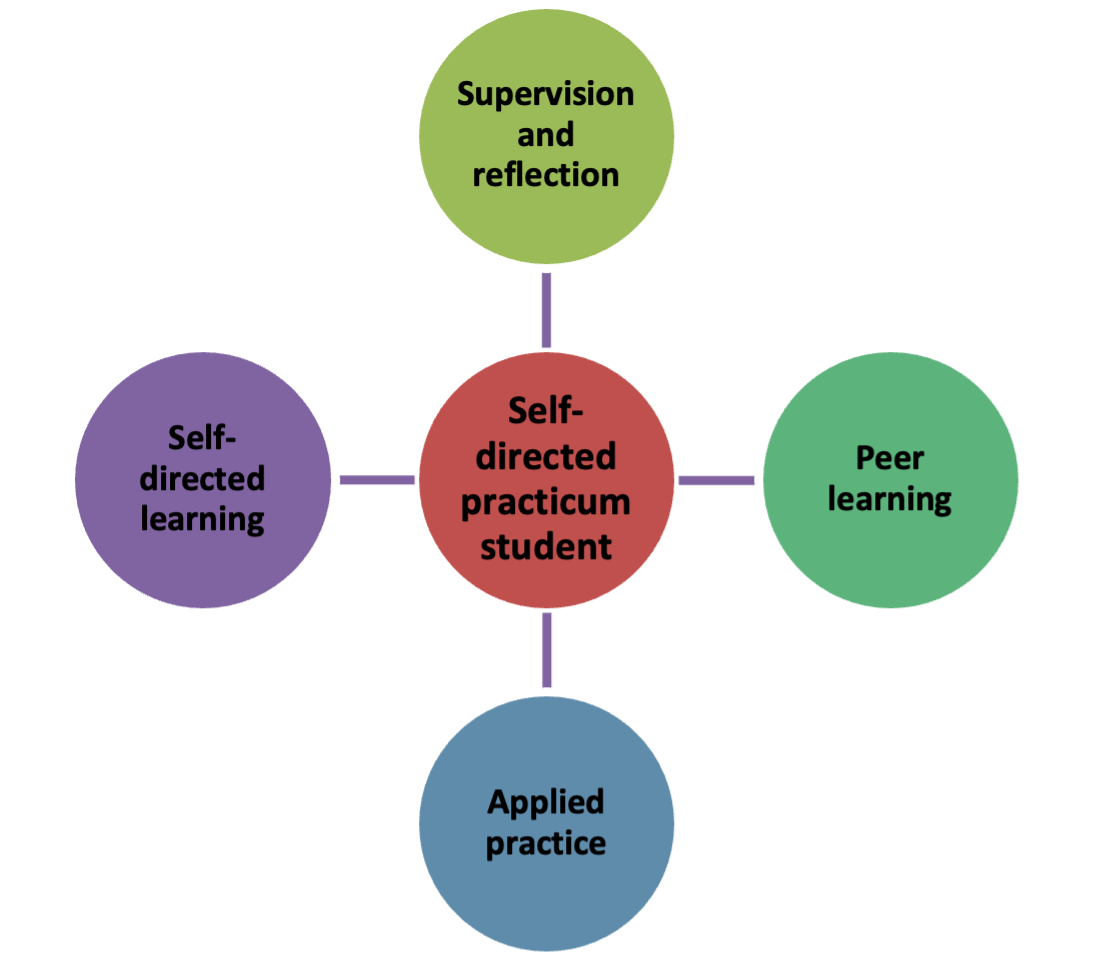
Adapted from Judge-Stasiak, 2024.
The supervised, self-directed practicum is guided by the curriculum plan for Bachelor of Social Work (BSW) and Master of Social Work (MSW) students. The practicum experience can span approximately one semester (13 weeks) or across an eight-month semester. Prior to the practicum, students submit a self-directed practicum proposal that is reviewed by a field education coordinator aligned with the learning objective requirements of the social work practicum. In practicum, each student develops an individualized learning plan in consultation with their faculty field instructor to show how they will meet social work learning objectives. This learning plan becomes a living document that guides the student’s experience and creates accountability for both learner and supervisor.
Practicum hours are distributed across three interconnected components. Applied practice comprises approximately one-third of total hours and involves active, interactive work with others, whether virtual or in-person. This can include service within community organizations, research activities such as data collection and analysis, program evaluation, community engagement through advocacy and collaboration, committee participation, grant writing, resource development, or participation in conferences and professional events. Self-directed learning hours, also approximately one-third of the total, focus on intentional knowledge and skill acquisition through activities such as engaging with academic literature, exploring practice frameworks and interventions, examining policies and legislation, studying diverse practice areas, and completing online courses or training modules. The remaining hours are dedicated to weekly individual and group supervision, where students engage in critical reflection, debrief their learning experiences, process challenges, and integrate theory with practice alongside both their supervisor and peer cohort. This includes engagement in reporting and evaluating key learning outcomes through initial, midterm, and final evaluation meetings and written reflections.
Self-directed practicum in this context refers to students identifying their own learning goals based on their passions and community contexts, selecting learning activities that align with those goals and practicum objectives, driving the pace and focus of their learning process, and taking ownership of their professional development. However, self-directed does not mean unsupervised; students receive supervision and evaluation throughout the practicum. Self-directed practicum is not unstructured, as students create detailed learning plans and maintain weekly reflective journals documenting their hours and learning. The self-directed practicum model maintains all accreditation and program requirements while offering flexibility in how those requirements are met.
Supervision occurs weekly through both individual connections and group sessions facilitated by the faculty field instructor. These supervision spaces provide accountability structures and opportunities for peer learning, mutual support, and collaborative meaning-making to help students process their learning, questions, and challenges. The focus of self-directed supervision groups mirrors the progress within the academic term from beginning to end, including integrating core concepts for professional social work development, responding to student issues and questions, and giving and receiving feedback through reflective practice and evaluation.
This model is particularly well-suited for students exploring emerging social work practice areas: pursuing generalist social work practice, trauma-informed approaches to working with individuals and families, macro-level interventions, community-based practice rooted in local contexts, and critical social work practice centered on antioppression and decolonization (Baines, 2017; Brown, 2020). Competency development in the self-directed model occurs through multiple interconnected mechanisms. Critical reflection and reflexive practice serve as primary vehicles for learning, with students engaging in weekly written reflections that examine their practice decisions, analyze their use of theory, question their assumptions and biases, and integrate feedback from supervision. Peer learning through group supervision creates what participants described as “mutual learning” (Judge-Stasiak, 2024), where students observe each other’s decision-making processes, provide feedback and alternative perspectives, practice collaborative problem-solving, and build professional relationships that extend beyond the practicum. Engagement with communities and social justice work grounds learning in authentic practice contexts where students navigate real-world complexity, respond to urgent social issues, develop skills through relationship-building, and contribute meaningfully to community-identified needs. Finally, application of theory is continuously integrated as students engage in active, real-life learning experiences and process and evaluate learning in supervision.
It bears emphasizing that competency in social work extends beyond clinical competencies to include policy analysis and advocacy for systemic change; community development and organizing; critical consciousness about power, privilege, and oppression; ethical reasoning in complex situations; structural analysis of social problems; cultural humility and antioppressive practice; self-awareness and reflexivity; and collaborative practice across systems levels (Asakura et al., 2020; Baines, 2017; Drolet et al., 2022; Mann-Johnson, Judge-Stasiak, et al., 2024). Many of these competencies are strengthened through the reflective, community-engaged, and justice-oriented approaches that self-directed learning facilitates, yet they remain underemphasized in field education literature that centers clinical observation models (Asakura et al., 2020; Mann-Johnson, McLaughlin, et al., 2024; Zosky et al., 2003).
This model intentionally centers these often-marginalized aspects of social work practice (Mann-Johnson, McLaughlin, et al., 2024). By creating space for students to engage deeply with community development, policy analysis, antiracist organizing, Indigenous ways of knowing, and advocacy work, the self-directed practicum addresses a critical gap in field education (Archer-Kuhn et al., 2022; Zosky et al., 2003). Students have pursued learning focused on trauma-informed approaches integrated with community organizing, Indigenous knowledge systems and decolonizing practice, policy development for affordable housing and food security, antiracist practice through community education and advocacy, restorative justice programming, mental health and crisis intervention in peer support contexts, and suicide prevention through public education and resource development. These learning experiences develop competencies equally essential to professional social work practice while honoring the profession’s commitment to social justice and systemic change. By positioning students as partners in the educational design, the self-directed practicum model enacts social work’s commitment to self-determination, lifelong learning and competence in practice while addressing persistent challenges in contemporary field education (Judge-Stasiak, 2024; Mann-Johnson & Judge-Stasiak, 2024).
Students in this model have engaged in diverse learning experiences, with some select examples listed below for illustrative purposes.
- Community development: Student A supported a research project focused on the impact of involvement and access to sports for at-risk youth, supported local drives for equipment and access to recreational fees for local low-income communities, and supported a campus-based food insecurity program including a grant application for sustainable funding.
- Antiracist practice: Student B designed antiracism workshops for a local nonprofit, integrating trauma-informed approaches with critical race theory while developing facilitation and group work skills. They were able to support a local human rights organization with a specific campaign around dignity and social justice within the prison system.
- Indigenous knowledge and decolonization: Student C worked with Elders as a helper for local community events focused on traditional healing practices, food and story as medicine, and culturally informed responses for the Indigenous community. They also supported an annual gathering, including preparing and sharing psychoeducational materials and information about resources and support services, and developed Cree language skills for working effectively with local Elders.
- Trauma-informed practice: Student D developed a comprehensive resource guide on trauma-informed crisis intervention for a women’s shelter, and organized a book club for social work students to discuss practice applications across settings. They also applied trauma-informed training in support of survivors of intimate partner and sexual violence.
Literature Review
Research on social work field education consistently highlights the increasing strain on traditional practicum models, including persistent placement shortages, the need for flexible learning pathways, and the importance of maintaining professional standards while adapting to changing educational landscapes (Ayala et al., 2018a, 2018b; Drolet et al., 2022; Fulton et al., 2019). These challenges have prompted calls for innovation and transformation in field education practices (Drolet et al., 2021; Kaushik et al., 2023; Vassos et al., 2018). Recent scholarship has begun documenting promising, wise, and innovative practices that challenge conventional assumptions about how field education must be structured (Vassos et al., 2018), creating space for alternative models that center student agency and respond to contemporary practice demands.
The scholarly literature reveals several interconnected themes regarding supervision in social work education. Supervision serves as the primary mechanism through which students develop professional competence, and is achieved through discussion, interaction, and exchange with professional social workers (Bogo et al., 2022; Kourgiantakis et al., 2019; Pecukonis, 2021; Radey et al., 2019). The supervisory relationship is crucial for the ethical preparation of students for practice (Cleak & Zuchowski, 2019; Dash, 2018; Duncanson et al., 2023). This supervision can occur in various formats including in-person, across distance, formally, informally, in groups, and individually, as students integrate knowledge, experience, and reflection with their professional identity (Guin, 2019; Nečasová, 2018).
Studies indicate that supervision quality significantly influences student satisfaction and learning outcomes (Bogo et al., 2022). Positive supervisory relationships often lead to transformative learning experiences and professional growth (Bogo et al., 2022; Fulton et al., 2019; Even-Sahav et al., 2020). Through supervision, students gain opportunities to engage in reflective practices necessary for culturally respectful work (Tarshis & Baird, 2019; Varghese et al., 2018). Recent literature documents the growing prevalence of external supervision and distance supervision models, driven by increased competition for placements and decreased community capacity (Yuen & O’Donoghue, 2020; Zuchowski et al., 2022). Field instruction, regardless of practicum type, remains critical for knowledge development and competence (Birkenmaier et al., 2012; Bogo et al., 2022). Through field instruction, students develop an understanding of practice complexity and intersecting societal contexts (Castillo et al., 2022; Shea, 2019).
Feedback and observation serve as crucial mechanisms for skill refinement and professional development in field education (Kourgiantakis et al., 2019). Bogo et al. (2016) identified a significant limitation in traditional field placements, where social work learners often lack direct opportunities to be observed by or to observe their field instructors in practice. However, observation and feedback can be facilitated through intentionally designed structures using direct and indirect methods (Gough & Wilks, 2012; Yildırım & Şahin, 2020), such as detailed case presentations, recorded sessions, group supervision, and structured reflection, providing opportunities for students to make implicit actions and beliefs explicit. Self-directed practicum models can address this gap through intensive individual and group supervision that centers reflective practice.
Reflective practice is fundamental to social work education, particularly during practicum. Reflective practice encompasses an internal examination of knowledge application, self-regulation, and critical thinking (Archer-Kuhn et al., 2022; Bogo et al., 2021). Students reflect on professional values and their developing social work identity through intentional supervision (Akilova et al., 2021; Bogo et al., 2021). This process helps students integrate knowledge with practice while maintaining a commitment to social justice (Morley & Dunstan, 2013; Pack, 2014). The literature acknowledges that practicum learning can be challenging and overwhelming while remaining critically important (Cleland & Masocha, 2020; Rehn & Kalman, 2018). However, research suggests that student autonomy in learning direction and pacing can enhance the experience (Testa & Egan, 2016; Theobald et al., 2017; Zuchowski et al., 2022).
While much of the field education literature focuses on skill development and competency acquisition, emerging scholarship examines how field education can embody critical pedagogy and social justice commitments. Asakura et al. (2020) explored what social justice looks like in clinical practice, revealing tensions between traditional clinical approaches and social justice–oriented teaching. Their work highlights the need for pedagogical models that integrate social justice values into direct practice education rather than treating them as separate domains. This research underscores the challenge of preparing students who can simultaneously provide compassionate clinical care and engage in critical analysis of power, privilege, and structural oppression.
The integration of critical consciousness into field education and research on alternative approaches suggests that when students are positioned as agents in their own learning rather than passive recipients of predetermined curricula, they develop stronger critical thinking capacities and deeper engagement with social justice principles (Briffett, et al., 2025; Clark et al., 2010; Drolet et al., 2022; Kaushik et al., 2023). This aligns with broader calls within social work education to center antioppressive practice, decolonizing frameworks, and student self-determination as foundational rather than supplementary to professional preparation (Baines, 2017; Briffett, et al., 2025; Clark et al., 2010).
Despite robust literature on the importance of field education and supervision, significant gaps remain that this study addresses. These include limited research on nontraditional models for practicum, clinical bias in supervision literature, an absence of Indigenous perspectives, and little evidence of student voice in the studies (Clark et al., 2010; Cleland & Masocha, 2020). Each will be detailed with more explanation. It is important to note that more recent research is showing a shift in the literature, with recent studies and publications speaking to these topics (Baines, 2017; Briffett, et al., 2025; Brown, 2020).
Most field education literature assumes agency-based placement with on-site supervision as the default structure, leaving alternative or nontraditional models underexamined (Kaushik et al., 2023; McLaughlin et al., 2015). While recent work has begun documenting innovative practices, particularly regarding supervision, this literature remains limited (Drolet et al., 2021, 2022; McLaughlin et al., 2015; Vassos et al., 2018). This gap is particularly problematic given persistent placement shortages and the need for flexible pathways that serve diverse student populations, including those in rural areas, students with employment and caregiving responsibilities, and those seeking practice experiences unavailable in their local communities (Ayala et al., 2018a, 2018b; Drolet et al., 2022; Fulton et al., 2019).
Existing research disproportionately focuses on clinical micro-practice skills, marginalizing macro-, community-, and policy-focused practice (Castillo et al., 2022; McLaughlin et al., 2015). Supervision literature emphasizes observable clinical interventions such as intake interviews, therapy sessions, and psychosocial assessments; this limits a holistic understanding of the breadth of social work practice, while offering limited guidance on supervising students engaged in community organizing, policy analysis, advocacy work, or structural change efforts. This bias reflects broader hierarchies within social work that privilege clinical practice over equally essential macro-level interventions, despite the profession’s stated commitment to addressing systemic oppression and advancing social justice.
Field education literature is growing, but is limited regarding Indigenous pedagogies, antioppressive frameworks, and student self-determination as epistemological foundations for learning (Baines, 2017; Clark et al., 2010; Cleland & Masocha, 2020). While some scholarship addresses cultural competence and diversity in supervision, it often remains at the level of individual practitioner awareness rather than questioning the colonial structures embedded in post-secondary education and supervision. Research examining how field education can embody decolonizing principles, centering Indigenous ways of knowing and redistributing power between students and educators, remains limited.
Research typically centers faculty and field instructor perspectives rather than student experiences and wisdom (Drolet et al., 2022). Students are positioned as subjects of study rather than knowledgeable contributors to the understanding of effective field education. This gap is particularly significant given social work’s stated commitment to elevating marginalized voices and recognizing the expertise of those with lived experience (Briffett, et al., 2025; Cleland & Masocha, 2020). Students navigating field education possess important insights about what supports their learning, yet their perspectives remain underrepresented in research findings.
This study addresses these gaps by examining supervision within a self-directed practicum model grounded in social work values of student self-determination, social justice, and antioppressive practice. Specifically, by analyzing both student and supervisor perspectives through qualitative interviews, this research illuminates how supervision functions when students drive their own learning, how competencies develop through reflective practice and peer learning, and what challenges and affordances emerge in nonhierarchical supervisory relationships.
Research Design
This study employed a qualitative case study methodology, aligned with the constructivist paradigm and the principles of critical social work education and antioppressive pedagogy (Baines, 2017; Bloomberg & Volpe, 2018; Brown, 2020; Schwandt & Gates, 2017; Tang Yan et al., 2022). Following Merriam and Tisdell’s (2015) approach, which defines a case study as “an in-depth description and analysis of a bounded system” (p. 37), this research examined the learning experiences within self-directed practicums at a Canadian university. The case study methodology was selected for its ability to examine real situations and understand complex human issues, aligning with social work education practices and values (Cohen et al., 2018; Creswell & Creswell, 2018; Csiernik & Birnbaum, 2017).
Participants included social work students and supervisors from both BSW and MSW programs who had direct experience with self-directed practicums. Data collection involved semi-structured interviews conducted virtually via Zoom, written reflections from one participant, and researcher field notes. The interview protocol included open-ended questions designed to build trust and rapport while gathering detailed descriptions of participants’ experiences (Merriam & Tisdell, 2015). All participants provided informed consent, and the study received approval from the university’s Conjoint Faculties Research Ethics Board (CFREB).
Data analysis followed Saldaña’s (2021) guidelines for qualitative research methodologies, employing a systematic approach. The first step involved data familiarization through a review of interview transcripts. Each transcript then went through member checking for transcript verification. The data was de-identified before initial coding. The initial coding involved manual line-by-line coding of transcripts to create a preliminary code book that was refined in tandem with a review and analysis of the research field notes. Quality assurance for the accuracy of the data involved triangulation through member checking, researcher reflexivity, audit trail maintenance through research field notes, and peer review with members of the findings. The analysis process emphasized the ethical principles of social work research, including nonmaleficence, beneficence, and respect for human dignity (Cohen et al., 2018). This approach facilitated the emergence of rich descriptions from participant responses while maintaining methodological rigor. The study implemented several ethical considerations:
- Voluntary participation with clear withdrawal options
- Confidentiality protection through secure data storage
- Password-protected and encrypted electronic systems
- Ongoing informed consent
- Member checking for accuracy verification
Researcher reflexivity and positionality were essential at every stage of this process. The study utilized an intentional design supported by thorough ethics approval and documentation. This included securing informed consent, evaluating participant risks, and maintaining careful attention to power dynamics. To manage potential bias, the researcher employed supervision and peer reviews of interview protocols, data analysis, and emerging themes. Furthermore, member checking was used to validate transcripts, interpretations, and final summaries. Finally, the researcher’s reflections and positionality were made explicit through reflexive journaling, while open-ended interview questions invited diverse perspectives, including both affirmations and critiques of the model.
This research is grounded in the principles of critical social work education, with a foundational commitment to student self-determination and antioppressive pedagogy (Baines, 2017; Brown, 2020). While these values informed the model’s design and the subsequent data interpretation, they also provided a necessary critical lens for examining traditional power structures within social work education. To ensure a balanced analysis, participant experiences, encompassing both the affordances and challenges of the model, were documented. Although findings were predominantly positive, limitations and areas for improvement are discussed transparently to maintain the integrity of the critical inquiry.
Findings
The qualitative data analysis of supervision practices in self-directed social practicum illuminates key themes. Supervision was described by participants as a cornerstone of successful self-directed practicums, with both students and supervisors emphasizing its transformative potential. In the self-directed practicum model, practicum supervisors are called faculty field instructors. Faculty field instructors describe their role as more comprehensive than traditional practicum supervision, requiring them to serve simultaneously as agency, mentor, and professional guide. As one supervisor reflected, “When you are the FFI, you truly are it. You are everything for that student in terms of their supervision and in a sense, you also become the agency.” This expanded role demands greater flexibility and adaptability, as supervisors must balance providing structure while allowing students to lead their learning experience. The supervision relationship in self-directed practicums is characterized by mutual learning and collaboration, with one supervisor noting, “We’re meeting as social workers and having those discussions and working together … it’s mutual learning most definitely.”
Group supervision dynamics were reported by participants as playing a particularly vital role in self-directed practicums, perceived as fostering peer learning and professional development in unique ways. Students reported that the group setting provided opportunities for resource sharing, mutual support, and exposure to diverse perspectives and experiences. As one supervisor observed,
What I’ve seen sometimes in group supervision as an FFI more than regular group supervision is like “you guys, I did this really cool thing. You should do it, too” … that information sharing and suggesting resources happens way more in self-directed.
This collaborative learning environment helps mitigate the potential isolation of self-directed learning, with one student highlighting, “I really liked how in the 300-hour practicum, I was in a little practicum group that met for supervision…. Having that support from the group was really great.”
The challenges of self-directed practicum supervision are multifaceted, requiring careful attention and innovative solutions. Scheduling difficulties emerged as a consistent challenge, with one supervisor noting, “Finding a time to do that group supervision can be challenging.” Some supervisors reported feeling underpaid for the extensive time and emotional investment required, particularly when supporting students through urgent situations. As one supervisor explained, “There have been some urgent situations that have come up that require a response, and sometimes the boundary between my family time and work time blurs because the response is needed quickly.” Additionally, supervisors must navigate a delicate balance between maintaining professional standards and showing empathy, especially regarding weekly reflections, with one supervisor sharing the challenge of “figuring out how to navigate that in a way that maintained the really positive relationships we were building.”
Students emphasized the critical importance of supervisor accessibility and support in their self-directed practicum success. One student reflected, “I couldn’t have done it without those weekly check-ins. Having the supervision hours mandatory was really great.” Regular supervision provides essential structure and validation for students navigating independent learning experiences. As another student noted,
My faculty field instructor/liaison has been a lifesaver. Through endless validation, support, help to reframe and search for opportunities even when things are inefficient and confusing, and connecting me with others in the larger community development social work world, she has kept me afloat during some very rough times.
Effective supervision in self-directed practicums requires a distinctive skill set that differs from traditional practicum supervision. As one participant observed, “In this whole situation, like a self-directed placement, I think everybody has to be skilled. Because otherwise the whole thing falls apart. Your supervisor needs to be skilled in terms of building relationship.” The most successful supervisors demonstrate the ability to balance multiple roles, with one supervisor describing it as “more like a mentor kind of role … it helped me grow as a person in terms of supervision.” This complex role requires ongoing professional development and peer support, with three supervisors emphasizing the importance of having the sessions with other faculty field instructors to come together and debrief together and share experiences.
The transformative potential of self-directed practicum supervision extends beyond individual student development to impact the broader field of social work education. One supervisor noted the satisfaction of seeing students develop, sharing, “You get goose bumps when you hear students doing great things and great ways.” The student-led nature of these practicums fosters deeper engagement, with one supervisor observing, “It’s a mastery of self in practice that you don’t get when you’re always with a supervisor.” A student described this transformative impact, stating, “I was able to tailor my practicum for those 700 hours to really set me up for success. I could just do what I wanted, instead of any extracurricular stuff that say a supervisor was having me do just to fill the time.” This suggests that self-directed practicum supervision, when properly supported and implemented, contributes significantly to developing autonomous practitioners who are well-prepared for professional practice.
Discussion
Self-directed practicum supervision emerges as a viable and potentially transformative pathway for social work education. This study’s findings suggest that when students take ownership of their learning experiences, they develop critical competencies while reshaping our understanding of how experiential learning occurs in professional contexts. As one participant noted, “This model has proven to align with the values and principles of the profession, such as self-determination, empowerment, and social justice while meeting the same learning objectives and career outcomes for students post-graduation.”
The transformative potential of self-directed practicum supervision extends beyond individual student success to address systemic challenges in social work education. Multiple participants characterized self-directed practicum as “the sole avenue” through which they could complete their education, and associated this flexible, accessible learning with social justice. This finding has profound implications for understanding how existing educational structures can either perpetuate or challenge inequities. This research study revealed that many students were parenting, working, or both, highlighting the critical need for flexible supervision approaches that support diverse student circumstances while maintaining educational quality. Participants described the financial and emotional strain of completing a full-time, unpaid practicum placement.
Group supervision emerged as a particularly powerful element of the self-directed model, fostering peer learning and professional development in unique ways. The shift toward what one participant described as a “mentorship-oriented role for supervisors” was experienced as instrumental in building trust and empowerment among learners. Group supervision was described as a space of “mutual learning, empowerment, and professional accountability.” To provide this level of quality supervision and educational oversight, supervisors reported the time-intensive nature of this work in supporting a variety of learners across different practice themes. Despite challenges, participants described the model as producing diverse and enriched learning environments.
The study revealed important considerations about accountability and support structures in self-directed practicum supervision. One participant emphasized the need for careful attention to “orientation and ongoing evaluation to ensure everyone is working toward collective learning.” This was particularly relevant for international students who, as described by one participant, “pay increased tuition fees and who may not have a local network or an understanding of the nuances of social work practice in Canada.” These observations highlight the importance of developing culturally responsive supervision approaches that can support diverse student populations.
A significant finding with implications for social work education is participants’ reports of the model’s ability to respond to external events and emerging social justice issues. According to participants, self-directed practicum supervision provided flexibility to address the pandemic, environmental disasters or extreme weather, human rights and social justice movements related to violence, and racial or financial inequity. This adaptability suggests that self-directed practicum supervision supports responsive preparation for students for the complexities of contemporary social work practice.
This study’s findings must be understood within the context of the model’s scope and design. The self-directed practicum is intentionally designed to center generalist social work practice, macro- and mezzo-level interventions, community-based and policy-oriented work, critical consciousness development, and antioppressive and decolonizing practice. It is important to note that self-directed learning does not mean students avoid challenge or rigor. Rather, the model positions students as capable, knowledgeable agents who, with appropriate support and accountability structures, can identify and pursue rigorous learning experiences aligned with their practice interests and community needs. The intensive supervision (both individual and group), learning plans co-created with faculty, and reflective practice requirements ensure accountability to professional standards.
Participants in this study described pursuing learning experiences such as collaborating with grassroots housing advocacy organizations, designing and facilitating antiracism workshops, working with Elders to document traditional healing practices, and developing comprehensive resource guides on trauma-informed crisis intervention. As one supervisor noted, students “pushed themselves beyond what we would have asked of them” in traditional placements, pursuing complex projects that integrated multiple competency areas. This approach reflects antioppressive and critical social work pedagogical principles to center self-determination and student voice and agency in determining their learning. Students in this study described their engagement in pursuing challenging, transformative learning experiences that exceeded traditional placement expectations when compared to their peers in the practicum seminar course.
While participants in this study successfully developed clinical micro-practice skills through reflective integration, group learning, and self-directed study, the self-directed model’s strength lies in creating space for practice areas often marginalized in traditional agency placements—policy analysis, community organizing, advocacy work, program development, and engagement with social justice movements. Programs prioritizing intensive clinical training may benefit from hybrid models combining self-directed and traditional agency-based components.
Looking forward, several critical questions emerge for social work education. How can programs better support the intensive workload experienced by both supervisors and students in self-directed practicums? What structures need to be in place to ensure equitable access to quality supervision, particularly for international students and those balancing multiple responsibilities? How can social work education programs better value and integrate diverse practicum experiences, moving beyond the traditional micro focus to embrace more holistic approaches to professional practice? Anecdotally, participants who had experiences in supervising different types of practicums and a diverse range of students found this question related broadly to social work education and not solely to self-directed practicum.
Self-directed practicum requires a commitment and investment from schools or faculties of social work. The primary cost involves compensating faculty field instructors to ensure quality supervisory oversight and evaluation of practicum students, as well as providing ongoing support to these supervisors. It takes some and resources to pay faculty field instructors and ensure the quality of supervisory oversight and evaluation for practicum students. This investment in social work education reduces strain on community agencies facing capacity constraints, which is particularly relevant given persistent placement shortages documented across Canada. Geographic barriers for rural and remote students are eliminated, as students can pursue learning within their own communities rather than relocating or commuting long distances. The model provides flexibility for students with employment and caregiving responsibilities who cannot accommodate traditional agency schedules. Perhaps most significantly, the model remains sustainable despite increase enrollment in social work programs.
Participants’ accounts suggest that self-directed practicum supervision, when properly supported and implemented, has the potential to enhance social work education while addressing current challenges in field education. As one participant reflected, “The freedom to select my learning activities has correlated with a deeper practical application of social work theories.” According to participants, this model demonstrates how programs can innovate within existing frameworks while maintaining educational quality and preparing students for contemporary practice demands. However, success requires intentional attention to supervision structures, support systems, and resource allocation to ensure sustainability and equity in implementation.
The implications of this research extend to broader considerations about the future of social work education and field instruction. Programs must consider how better to support supervisors, address workload concerns, and ensure equitable access to quality supervision experiences. Student voice needs to be better understood in social work education, particularly with the changing diversity of adult learners and increased pressures and impact on financial, physical, and emotional stress as students increasingly hold multiple responsibilities outside learning. As the field continues to evolve, self-directed practicum supervision offers a promising model for advancing social work education, while upholding core professional values of empowerment, social justice, and self-determination. Recommendations for social work education are summarized in Figure 2 below.
Figure 2
Recommendations for Social Work Education
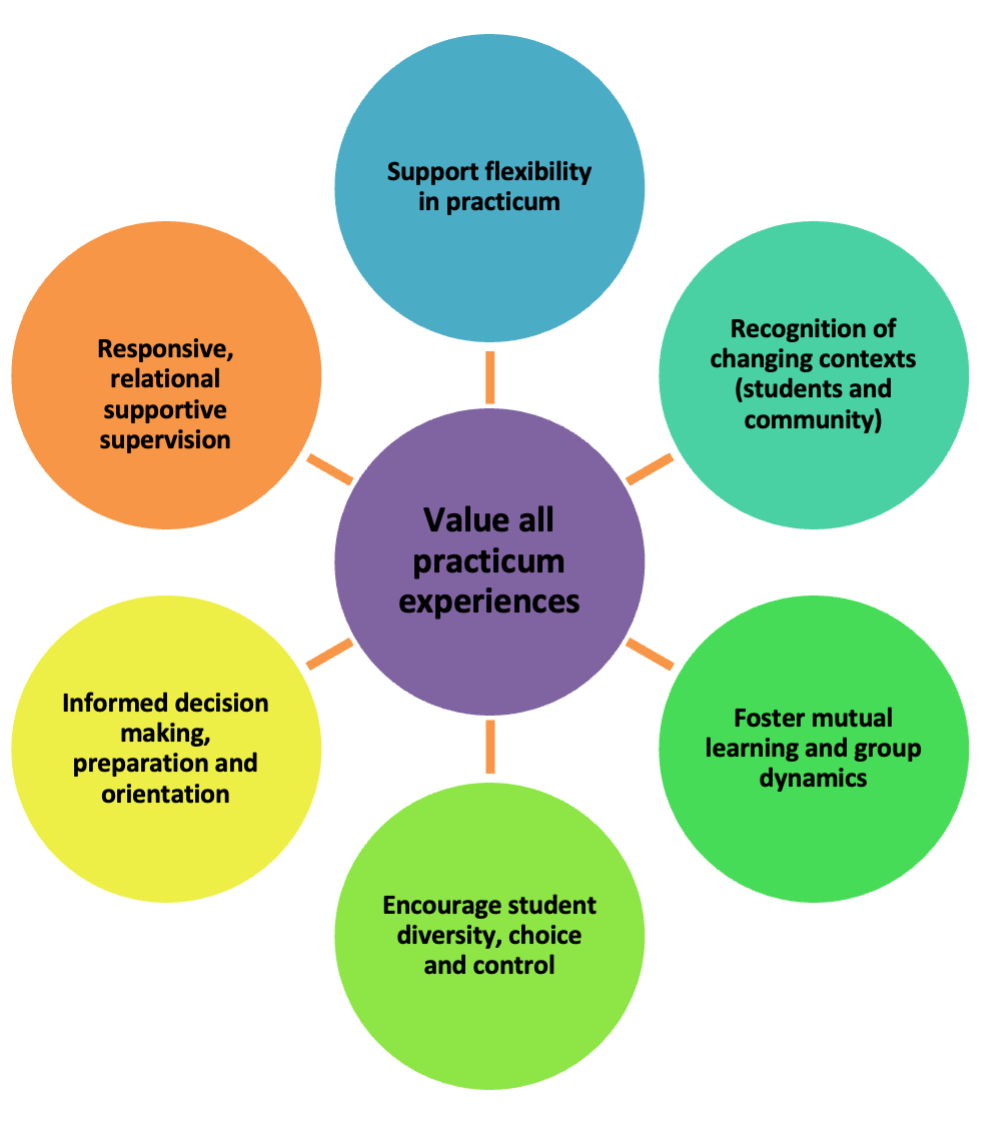
Adapted from Stasiak, 2024.
Limitations and Future Directions
This study was bounded by specific temporal and geographical contexts, examining one self-directed practicum model at a particular institution during a defined period. The research did not include comparative analysis with traditional practicum placements, limiting conclusions about relative outcomes across different models. The predominantly positive findings may reflect that participants who found the model supportive were more able to participate in this research.
Despite these limitations, participants reported transformative learning, skill development, and preparation for practice. These outcomes reflect their lived expertise navigating educational barriers while developing professional competencies. This study positions student voices as authoritative sources of knowledge about effective social work field education centering student wellbeing—socially, financially, physically, and mentally. The rich qualitative data support positive outcomes for nontraditional field education models.
Future research could expand understanding of self-directed models in several directions. Longitudinal studies exploring career outcomes for graduates across different practicum models would illuminate how various educational experiences shape professional trajectories. Research examining what students themselves identify as most impactful to their development as professional social workers, across both self-directed and traditional placements, would center student expertise in understanding effective pedagogy in contemporary contexts. Studies investigating how graduates continue to apply the autonomy and critical thinking developed through self-directed approaches in their ongoing practice would demonstrate the long-term impacts of this model.
Additionally, comparative studies examining how different practicum structures either reproduce or disrupt educational inequities would further illuminate the structural dimensions of experiential learning. Such research could reveal how flexible, student-centered approaches support diverse pathways to professional competence while challenging assumptions about what constitutes rigorous field education.
Concluding Remarks
This study demonstrates that the supervisory relationship in self-directed practicums creates a transformative dynamic for both students and faculty supervisors, fostering mutual growth that addresses long-standing challenges while advancing core professional values. Participants characterized effective supervision in this context as succeeding through three key mechanisms: collaborative cultivation of student agency, reciprocal professional development, and the creation of reflective spaces that deepen practice wisdom for all involved.
The supervisory partnership in self-directed practicums challenges traditional hierarchical models while highlighting opportunities for innovative mentorship within existing accreditation frameworks. This transformative supervision approach maintains educational quality while increasing accessibility and equity in field education. Students and supervisors alike reported deeper engagement with learning objectives and stronger integration of theory and practice compared to traditional supervision models, particularly through the synergy of individual and group supervision contexts.
However, the implementation of this supervisory approach requires careful attention to relational dynamics and supporting infrastructure. Faculty field instructors navigate complex, multifaceted relationships that extend beyond traditional supervision, demanding greater time investment and emotional labor while offering significant professional renewal. The model’s success depends on cultivating authentic supervisory relationships, fostering mutual vulnerability, and providing adequate resources to support both students and supervisors through this transformative process.
This research suggests several critical directions for advancing supervisory practices in social work field education. Programs must develop sustainable models that honor the intensive, mutually transformative supervision required in self-directed practicums. Supervisors must continually explore how to balance guidance with student autonomy, particularly for international students and those facing multiple life demands. Social work education must evaluate how supervisory practices can better accommodate innovative field education models while enriching professional development for all participants. The supervisory framework within self-directed practicums offers promising opportunities for mutual growth while addressing persistent challenges in social work field education. By cultivating partnerships in which both students and supervisors experience transformation, this approach aligns with social work’s commitment to self-determination and social justice, while preparing graduates for the complexities of contemporary practice. Further exploration of how this supervisory model might nurture professional identity development across different institutional contexts could complement existing practices in ways that enrich experiential learning for all involved.
References
Akilova, M., Donovan, A., Miles, B., Phillips, N., & Verdooner, E. M. (2021). Theory is not enough! Experiential and project-based approaches to teaching international social work. Journal of Human Rights and Social Work, 6(3), 193–203. https://doi.org/10.1007/s41134-021-00165-1
Archer-Kuhn, B., Judge-Stasiak, A., Letkemann, L., Hewson, J., & Ayala, J. (2022). The self-directed practicum: An innovative response to COVID-19 and a crisis in field education. In S. M. S. Baikady, V. Nadesan, & M. R. Islam (Eds.), The Routledge handbook of field work education in social work (pp. 531–541). Taylor & Francis.
Asakura, K., Strumm, B., Todd, S., & Varghese, R. (2020). What does social justice look like when sitting with clients? A qualitative study of teaching clinical social work from a social justice perspective. Journal of Social Work Education, 56(3), 442–455. https://doi.org/10.1080/10437797.2019.1656588
Ayala, J., Drolet, J., Fulton, A., Hewson, J., Letkemann, L., Baynton, M., Elliott, G., Judge-Stasiak, A., Blaug, C., Gérard Tétreault, A., & Schweizer, E. (2018a). Field education in crisis: Experiences of field education coordinators in Canada. Social Work Education, 37(3), 281–293. https://doi.org/10.1080/02615479.2017.1397109
Ayala, J., Drolet, J., Fulton, A., Hewson, J., Letkemann, L., Baynton, M., Elliott, G, Judge-Stasiak, A., Blaug, C., Gérard Tétreault, A., & Schweizer, E. (2018b). Restructuring social work education in 21st century Canada. Canadian Social Work Review, 35(2), 45–65. https://doi.org/10.7202/1058479ar
Baines, D. (2017). Anti-oppressive practice: Roots, theory and tensions. In D. Baines (Ed.), Doing anti-oppressive practice: Social justice social work (3rd ed.). Fernwood Publishing.
Birkenmaier, J., Curley, J., & Rowan, N. L. (2012). Knowledge outcomes within rotation models of social work field education. Journal of Gerontological Social Work, 55(4), 321–336. https://doi.org/10.1080/01634372.2011.625596
Bloomberg, L., & Volpe, M. (2018). Completing your qualitative dissertation: A roadmap from beginning to end (4th ed.). Sage.
Bogo, M., Kourgiantakis, T., Burns, D., King, B., & Lee, E. (2021). Guidelines for advancing clinical social work practice through articulating practice competencies: The Toronto simulation model. Clinical Social Work Journal, 49(2), 117–127. https://doi.org/10.1007/s10615-020-00777-6
Bogo, M., Lee, B., McKee, E., Baird, S. L., & Ramjattan, R. (2016). Field instructors’ perceptions of foundation year students’ readiness to engage in field education. Social Work Education, 35(2), 204–214. https://doi.org/10.1080/02615479.2015.1123689
Bogo, M., Sewell, K. M., Muhamud, F., & Kourgiantakis, T. (2022). Social work field instruction: A scoping review. Social Work Education, 41(4), 391–424. https://doi.org/10.1080/02615479.2020.1842868
Briffett Aktaş, C., Wong, K. L., Kong, W. F. O., & Ho, C. P. (2025). The student voice for social justice pedagogical method. Teaching in Higher Education, 30(1), 1–18. https://doi.org/10.1080/13562517.2023.2183770
Brown, C. (2020). Critical clinical social work: Theoretical and practical considerations. In C. Brown & J. E. MacDonald (Eds.). (2020), Critical clinical social work: Counterstorying for social justice. Canadian Scholars’ Press. https://canadianscholars.ca/book/critical-clinical-social-work/
Canadian Association of Social Workers. (2024). CASW Code of Ethics. https://www.casw-acts.ca/en/casw-code-ethics-2024
Castillo, J. T., Hendrix, E. W., Nguyen, V. L., & Riquino, M. R. (2022). Macro practice supervision by social work field instructors. Journal of Social Work Education, 58(2), 333–345. https://doi.org/10.1080/10437797.2021.1885539
Clark, N., Drolet, J., Mathews, N., Walton, P., Tamburro, P. R., Derrick, J., Michaud, V., Armstrong, J., & Arnouse, M. (2010). Decolonizing field education: “Melq’ilwiye”coming together: An exploratory study in the interior of British Columbia. Critical Social Work, 11(1), 6–25. https://doi.org/10.22329/csw.v11i1.5812
Cleak, H., & Zuchowski, I. (2019). Empirical support and considerations for social work supervision of students in alternative placement models. Clinical Social Work Journal, 47(1), 32–42. https://doi.org/10.1007/s10615-018-0692-3
Cleland, A., & Masocha, S. (2020). Centering aboriginal epistemologies: Development of a 3D simulation for social work education. Advances in Social Work & Welfare Education, 21(2), 8–21. https://journal.anzswwer.org/index.php/advances/article/view/106/93
Cohen, L., Manion, L., & Morrison, K. (2018). Research methods in education. Taylor & Francis. https://doi.org/10.4324/9781315456539
Creswell, J., & Creswell, D. (2018). Research design: Qualitative, quantitative, and mixed methods approaches (5th ed.). Sage.
Csiernik, R., & Birnbaum, R. (2017). Practising social work research: Case studies for learning (2nd ed.). University of Toronto Press.
Dash, B. M. (2018). Social work education through open and distance learning in India: Opportunities and challenges. Social Work Education, 37(6), 813–820. https://doi.org/10.1080/02615479.2018.1481204
Drolet, J. L., Charles, G., McConnell, S. M., & Bogo, M. (2022). Conclusion. In J. L. Drolet, G. Charles, S. M. McConnell, & M. Bogo (Eds.), Transforming social work field education: New insights from practice research and scholarship (pp. 359-–70). LCR Publishing Services. https://doi.org/10.11575/PRISM/40519
Drolet, J., Salim, S., Choudhury, M., Khatiwada, K., Tettman, E., Zhang, D., Walsh, C., Nicholas, D., McConnell, S., Charles, G., Allison, K., McKee, El, Mann-Johnson, J., Hanley, J., St. George, S., Wulff, D., & Clark, N. (2021). Inventory of promising, wise, and innovative practices in field education [Poster]. Transforming the Field Education Landscape, University of Calgary. https://tinyurl.com/5hfm2wkd
Duncanson, K., Gillieatt, S., Mahboub, L., & Martin, R. (2023). Service users in social work student supervision: A scoping review. Australian Social Work, 76(4), 534–546. https://doi.org/10.1080/0312407X.2021.1925938
Even-Zahav, R., Refaeli, T., Shemesh, S., Gottlieb, S., & Ben-Porat, A. (2020). Supervision satisfaction among social work students in Israel: Supervision components, peer support, and trauma-related factors. Research on Social Work Practice, 30(8), 884–894. https://doi.org/10.1177/1049731520936755
Freire, P. (2017). Pedagogy of the oppressed. Penguin Classics.
Fulton, A. E., Dimitropoulos, G., Ayala, J., McLaughlin, A. M., Baynton, M., Blaug, C., Collins, T., Elliott, G., Judge-Stasiak, A., Letkemann, L., & Ragan, E. (2019). Role-playing: A strategy for practicum preparation for foundation year MSW students, Journal of Teaching in Social Work, 39(2), 163–180. https://doi.org/10.1080/08841233.2019.1576573
Gough, H. R., & Wilks, S. E. (2012). Rotational field placements: Integrative review and application to gerontological social work. Social Work Education, 31(1), 90–109. https://doi.org/10.1080/02615479.2010.549222
Guin, S. (2019). Field work supervision through open and distance learning: An Indian perspective. AAOU Journal, 14(2), 107–121. https://doi.org/10.1108/AAOUJ-08-2019-0031
Judge-Stasiak, A. (2024). A qualitative case study exploring the learning experiences of self-directed social work practicum students [Doctoral thesis, University of Calgary, Calgary, Canada]. PRISM. https://tinyurl.com/5n8bp38u
Kaushik, V., Klassen, S., Drolet, J., & Walsh, C. (2023). New directions in social work field education in Canada: Promising, wise, and innovative practices. Journal of Teaching in Social Work, 43(3), 324–341. https://doi.org/10.1080/08841233.2023.2210326
Kourgiantakis, T., Sewell, K. M., & Bogo, M. (2019). The importance of feedback in preparing social work students for field education. Clinical Social Work Journal, 47(1), 124–133. https://doi.org/10.1007/s10615-018-0671-8
Mann-Johnson, J., & Judge-Stasiak, A. (2024). Self-directed discovery in experiential learning: Innovating BSW curriculum design. Transformative Social Work, 2(1). https://doi.org/10.55016/ojs/tsw.v2i1.78783
Mann-Johnson, J., Judge-Stasiak, A., Drolet, J., & Ross, J. (2024). Revisioning practicum: Lessons from supervised self-directed practicum and research informing curricular change for undergraduate social work students. In L. Shklarski, & Y. Latzer (Eds.), Rethinking social work education in light of the Covid-19 pandemic: Lessons learned from social work scholars and leaders. Cognella.
Mann-Johnson, J., McLaughlin, A.-M., Wandler, M., & Vos, B. (2024). Bridging the divide: Exploring the disconnect between micro and macro practice and implications for BSW field education. Transformative Social Work, 2(1). https://doi.org/10.55016/ojs/tsw.v2i1.78558
McLaughlin, H., Scholar, H., McCaughan, S., & Coleman, A. (2015). Are non-traditional social work placements second-best learning opportunities for social work qualifying students? The British Journal of Social Work, 45(5), 1469–1488. http://www.jstor.org/stable/43687925
Merriam, S. B., & Tisdell, E. J. (2015). Qualitative research: A guide to design and implementation (4th ed.). John Wiley & Sons.
Morley, C., & Dunstan, J. (2013). Critical reflection: A response to neoliberal challenges to field education? Social Work Education, 32(2), 141–156. https://doi.org/10.1080/02615479.2012.730141
Nečasová, M. (2018). Teaching social work supervision to part-time students of distance studies: Challenges and opportunities. Social Work Education, 37(6), 731–745. https://doi.org/10.1080/02615479.2018.1487549
Pack, M. (2014). Practice journeys: Using online reflective journals in social work fieldwork education. Reflective Practice, 15(3), 404–412. https://doi.org/10.1080/14623943.2014.883304
Pecukonis, E. V. (2021). Guidelines for integrating live supervision in simulation-based clinical education: An example for teaching motivational interviewing. Clinical Social Work Journal, 49(2), 151–161. https://doi.org/10.1007/s10615-021-00805-z
Radey, M., Schelbe, L., & King, E. A. (2019). Field training experiences of child welfare workers: Implications for supervision and field education. Clinical Social Work Journal, 47(1), 134–145. https://doi.org/10.1007/s10615-018-0669-2
Rehn, M., & Kalman, H. (2018). Social work students’ reflections on challenges during field education. Journal of Social Work, 18(4), 451–467. https://doi.org/10.1177/1468017316654362
Saldaña, J. (2021). The coding manual for qualitative researchers (4th ed.). Sage.
Schwandt, T. A., & Gates, E. F. (2017). Case study methodology. In N. K. Denzin & Y. S. Lincoln (Eds.), The SAGE handbook of qualitative research (5 ed.). SAGE Publishing.
Shea, S. E. (2019). Reflective supervision for social work field instructors: Lessons learned from infant mental health. Clinical Social Work Journal, 47(1), 61–71. https://doi.org/10.1007/s10615-018-0677-2
Tang Yan, C., Orlandimeje, R., Drucker, R., & Lang, A. J. (2022). Unsettling reflexivity and critical race pedagogy in social work education: Narratives from social work students. Social Work Education, 41(8), 1669–1692. https://doi.org/10.1080/02615479.2021.1924665
Tarshis, S., & Baird, S. L. (2019). Addressing the indirect trauma of social work students in intimate partner violence (IPV) field placements: A framework for supervision. Clinical Social Work Journal, 47(1), 90–102. https://doi.org/10.1007/s10615-018-0678-1
Testa, D., & Egan, R. (2016). How useful are discussion boards and written critical reflections in helping social work students critically reflect on their field education placements? Qualitative Social Work, 15(2), 263–280. https://doi.org/10.1177/1473325014565146
Theobald, J., Gardner, F., & Long, N. (2017). Teaching critical reflection in social work field education. Journal of Social Work Education, 53(2), 300–311. https://doi.org/10.1080/10437797.2016.1266978
Vassos, S., Harms, L., & Rose, D. (2018). Supervision and social work students: Relationships in a team-based rotation placement model. Social Work Education, 37(3), 328–341. https://doi.org/10.1080/02615479.2017.1406466
Varghese, R., Quiros, L., & Berger, R. (2018). Reflective practices for engaging in trauma-informed culturally competent supervision. Smith College Studies in Social Work, 88(2), 135–151. https://doi.org/10.1080/00377317.2018.1439826
Walsh, J. J., Drolet, J. L., Alemi, M. I., Collins, T., Kaushik, V., McConnell, S. M., Mckee, E., Mi, E., Sussman, T., & Walsh, C. A. (2023). Transforming the field education landscape: National survey on the state of field education in Canada. Social Work Education, 42(5), 646–662. https://doi.org/10.1080/02615479.2022.2056159
Yildırım, B., & Şahin, F. (2020). Simulation applications: A potential approach for Turkish social work education. Journal of Society & Social Work, 31(3), 1227–1247. https://doi.org/10.33417/tsh.664437
Yuen M. H., & O’Donoghue, K. (2020). A snapshot of cyber supervision in Mainland China. Qualitative Social Work, 19(4), 612–629. https://doi.org/10.1177/1473325019836714
Zosky, D. L., Unger, J., White, K., & Mills, S. J. (2003). Non-traditional and traditional social work students: Perceptions of field instructors. Journal of Teaching in Social Work, 23(3-4), 185–201. https://doi.org/10.1300/J067v23n03_14
Zuchowski, I., Cleak, H., & Cleaver, M. (2022). International social work students in field education: Considerations for supervision. Social Work Education, 41(6), 1155–1169. https://doi.org/10.1080/02615479.2021.1935843