Abstract
Required, often uncompensated social work practicums may interfere with students’ academic progress, yet practicum-related academic disruption remains understudied. Using data from 618 Bachelor of Social Work (BSW) and Master of Social Work (MSW) students, this study examined six outcomes. Overall, 63.3% reported at least one disruption. In complete-case hierarchical logistic regression (N = 414), emotional exhaustion was associated with higher odds of disruption (AOR = 1.14, 95% CI [1.08, 1.21]), and each additional material hardship was associated with approximately twice the odds (AOR = 2.01, 95% CI [1.64, 2.49]). Outcome-specific models identified distinct associations involving age, first-generation status, disability, and employment, supporting material assistance, flexible placements, and differentiated supports.
Keywords: academic disruption, practicum education, field education, material hardship, social work students
Social work field education, increasingly referred to as practicum education, has consistently been identified as the “signature pedagogy” (Shulman, 2005, p. 52) of the profession in the Council on Social Work Education’s Educational Policy and Accreditation Standards (Council on Social Work Education [CSWE], 2008, 2022). During practicum, students integrate classroom knowledge with supervised practice and develop professional competencies. Yet the required and often uncompensated structure of practicum can intensify material hardship, emotional exhaustion, and conflict with employment and family responsibilities (Aguilera et al., 2022; Cox et al., 2022; Farr, 2024; Gyourko et al., 2024; Hodge et al., 2021; Morley et al., 2024; Smith et al., 2021). Although these burdens are increasingly documented, less is known about their relationship to direct disruptions in students’ academic participation and progression.
Academic Disruption in Practicum Education
Academic disruption encompasses practicum-related educational hardships that interfere with students’ ability to participate in or progress through their programs, including not purchasing required textbooks, receiving a lower grade, delaying graduation, withdrawing from a course, stopping out for a semester or more, or failing a course (Appedu et al., 2021; Bartley et al., 2025; DeCarlo et al., 2025; Florida Virtual Campus, 2019; Leslie, 2026; Unrau et al., 2020). These consequences range from resource-related academic compromise to direct interruptions in degree progression. Although they are discussed in the broader literatures on retention, persistence, and student hardship, they are less often examined as consequences of the financial and psychosocial conditions of required practicum education (Gyourko et al., 2024; Joo et al., 2008; Teakel et al., 2025; Terriquez & Gurantz, 2015). Centering academic disruption as a measurable outcome may help programs identify students at risk and determine which practicum-related conditions are most closely associated with particular academic consequences.
Material Hardship and Academic Progress
Material hardship is one pathway through which practicum demands may become academically consequential. Postsecondary students may experience food insecurity, transportation costs, delayed health care, childcare burdens, debt accumulation, and difficulty purchasing required course materials (Appedu et al., 2021; Hope Center for College, Community, and Justice [Hope Center], 2021; Martinez et al., 2021; Olfert et al., 2023). Within social work education, lengthy and frequently unpaid placements may intensify these hardships through direct expenses and the opportunity costs of reduced paid employment (Hodge et al., 2021; Johnstone et al., 2016; Morley et al., 2024; Unrau et al., 2020). Unmet basic needs can reduce engagement and impede academic progress and persistence (Joo et al., 2008; Terriquez & Gurantz, 2015). Therefore, in this study material hardship was conceptualized as distinct from general perceptions of financial strain because it captures concrete unmet needs and behavioral adaptations that may interfere with academic participation.
Emotional Exhaustion and Psychosocial Burden
Practicum may also become academically consequential through emotional exhaustion and psychosocial burden. Social work students often complete placements in emotionally demanding settings while simultaneously managing coursework, employment, family responsibilities, and financial strain. Lengthy or unpaid placements have been linked to elevated mental distress, emotional exhaustion, reduced well-being, and disengagement from academic and professional roles (Aguilera et al., 2022; Anderson, 2025; Fletcher et al., 2023; Hodge et al., 2021; Smith et al., 2021). Emotional exhaustion, a core dimension of burnout characterized by depleted emotional resources (Maslach & Jackson, 1981; Maslach et al., 1996), may be particularly salient for students absorbing the emotional demands of client-facing work without commensurate institutional or financial support. Although a cross-sectional design cannot establish a causal pathway, this literature suggests that emotional exhaustion may be one mechanism, alongside material hardship, through which practicum demands are associated with academic disruption.
Inequitable Academic Risk
Practicum-related disruption may not be evenly distributed across students. First-generation students, students with disabilities, older students, student parents, and students working substantial paid hours may enter practicum with fewer financial buffers and greater competing role demands than their peers (Fletcher et al., 2023; Joo et al., 2008; Koch et al., 2018; Lombardi et al., 2012; Morley et al., 2024; Smith et al., 2021; Terriquez & Gurantz, 2015; Unrau et al., 2020). First-generation students may have less access to informal institutional knowledge and personal resources. Students with disabilities may experience lower academic integration and gaps between formal accommodations and the variable, interpersonal demands of practicum settings (Koch et al., 2018; Lombardi et al., 2012; Rußmann et al., 2024). Caregiving and paid employment can create time poverty, role strain, and competing obligations, while older students may have less flexibility to absorb practicum demands. Together, these conditions may make reduced course loads, delayed graduation, or withdrawal more likely for students already navigating structural disadvantages within higher education.
Composite and Item-Specific Academic Disruption Outcomes
Academic disruption is not a single, uniform outcome. Some consequences, such as not purchasing required textbooks or receiving a lower grade, may represent comparatively early or resource-related academic strain, while others, such as delayed graduation, course withdrawal, stopping out, or course failure, reflect more direct interruptions to degree progression. Prior research examining financial stress and hardship among college students suggests that different academic outcomes can have different correlates and different underlying mechanisms (Fletcher et al., 2023; Joo et al., 2008; Lombardi et al., 2012; Terriquez & Gurantz, 2015). A predictor that is only weakly related to broad indices of hardship or disruption may nevertheless be strongly related to a specific consequence, such as delayed graduation among older or working students. Examining both a composite indicator of any academic disruption and item-specific outcomes therefore allows this study to clarify whether the strongest overall correlates of academic disruption differ from the predictors of particular academic consequences, a distinction that directly informs the secondary outcome-specific models reported below.
Guided by this literature, the present study examined correlates of practicum-related academic disruption among BSW and MSW students. Academic disruption was defined broadly to include not purchasing required textbooks, receiving a lower grade, delaying graduation, withdrawing from a course, dropping out for a semester or more, and failing a course. The primary analysis examined correlates of any academic disruption, including student background characteristics, program/practicum context, role demands, emotional exhaustion, and material hardship. Secondary exploratory models examined whether correlates differed across specific academic disruption outcomes.
Two research questions were examined: (a) What student characteristics, practicum context factors, role demands, emotional exhaustion, and material hardships are associated with any practicum-related academic disruption? (b) Do correlates differ across specific forms of academic disruption?
Method
Study Design and Data Source
This study used secondary cross-sectional data from a national survey of BSW and MSW students completing a degree-required social work practicum. The parent study, The Price of Placement (Part 2): Basic Needs and Well-Being of U.S. Social Work Students in Field Practicums, examined practicum-related hardship, basic needs, and student well-being (DeCarlo et al., 2025). The parent study received approval from La Salle University’s Institutional Review Board before data collection. Because the present study relied exclusively on existing de-identified data, involved no additional participant contact, and required no new data collection, the author’s institutional review board determined that the secondary analysis was exempt from further human-subjects review.
Participants were Bachelor of Social Work (BSW) and Master of Social Work (MSW) students enrolled in accredited social work programs across the United States and completing a required field practicum. The national online survey was distributed throughout April and through the first week of May 2023 through professional social work organizations, academic programs, student networks, and social media. Eligibility criteria required respondents to be at least 18 years old, enrolled in a BSW or MSW program, and participating in a degree-required field placement. The full analytic dataset included 618 students. Analytic sample sizes varied across analyses because of item nonresponse, and the primary hierarchical logistic regression used complete cases for all included variables.
Measures
Academic Disruption
Academic disruption was assessed using six items from the Practicum Financial Impact Index (PFII; DeCarlo et al., 2025). Students indicated whether the financial impact of practicum caused them to (a) not purchase required textbooks, (b) receive a lower grade in a course, (c) delay graduation, (d) withdraw from a course, (e) drop out for a semester or more, or (f) fail a course. The items were informed by the 2018 Student Textbook and Course Materials Survey and the social work student hardship literature (Florida Virtual Campus, 2019; Johnstone et al., 2016; Unrau et al., 2020). Each item was coded as 0 = no or 1 = yes. The primary outcome was coded 1 when a student endorsed one or more items and 0 when no item was endorsed. Because the items range from resource-related compromise to direct interruptions in progression, the composite represents any practicum-related academic disruption rather than severe disruption alone. In the current study, the six-item composite demonstrated strong internal consistency (Cronbach’s α = .88; McDonald’s ωt = .92).
Student Characteristics
Age was retained as a continuous variable measured in years. First-generation status was coded 0 = continuing-generation student and 1 = first-generation student, and disability status was coded 0 = no reported disability and 1 = reported disability. Gender was coded 0 = female and 1 = male or nonbinary; race was coded 0 = White and 1 = student of color; household income was coded 0 = less than $60,000 and 1 = $60,000 or more; and sexual orientation was coded 0 = heterosexual/straight and 1 = LGBTQ+. The 0-coded categories served as the reference groups in the logistic regression models.
Program and Practicum Context
Program level was coded 0 = BSW or 1 = MSW. Perceived institutional support was calculated as the mean result of responses to two items: “My physical and mental health is a priority for the organization and supervisor at my field practicum site” and “My physical and mental health is a priority for faculty and staff in my university’s field education program.” Responses ranged from 1 = strongly disagree to 5 = strongly agree, with higher scores indicating greater perceived support. The items were moderately correlated (r = .53) and were retained together because they capture conceptually complementary support from the placement site and university field education program.
Role Demands
Role demands were measured using students’ reported weekly caregiving and paid employment hours. Caregiving hours represented time spent caring for loved ones and completing related family responsibilities, and paid employment hours represented time spent working for pay outside the practicum. Both variables were retained as continuous measures.
Emotional Exhaustion
Emotional exhaustion was measured using the three-item emotional exhaustion subscale of the Maslach Burnout Inventory-General Survey nine-item short form (MBI-GS9) (Maslach & Jackson, 1981; Maslach et al., 1996; Wang et al., 2024). Items included “I feel emotionally drained from my field practicum,” “I feel fatigued when I get up in the morning and have to face another day at my field practicum,” and “Working with people all day is really a strain for me.” Responses were coded from 0 = never to 6 = every day across seven frequency categories; “Does not apply to my practicum” was treated as missing. The three items were summed to produce scores from 0 to 18, with higher scores indicating greater emotional exhaustion. Prior studies have reported Cronbach’s α values ranging from .66 to .74, and α was .82 in the current sample.
Material Hardship
Material hardship was operationalized as a cumulative count of six PFII indicators reflecting concrete practicum-related hardship: selling blood plasma, receiving food from a food pantry, skipping a meal, incurring additional student loan debt, receiving Supplemental Nutrition Assistance Program benefits, and delaying necessary physical or mental health treatment (DeCarlo et al., 2025). Each item was coded 0 = no or 1 = yes and summed, with higher scores indicating a greater number of hardships. Changes in paid employment hours were excluded from this count because they conceptually overlapped with the separate paid-employment-hours variable. The count was treated as an index of heterogeneous hardship exposures rather than a unidimensional latent scale.
Missing Data Analysis
Missing data were evaluated before multivariable analysis. Missingness ranged from no missing data for program level to 14.4% for the academic disruption composite and material hardship count. Little’s (1988) missing completely at random (MCAR) test was nonsignificant, χ²(408) = 424.00, p = .280, indicating that the test did not provide evidence against the “missing completely at random” assumption. The primary hierarchical logistic regression was therefore estimated using complete cases, yielding an analytic sample of n = 414.
Data Analysis
All analyses were conducted in R version 4.6.0. Frequencies and descriptive statistics summarized sample characteristics and the prevalence of the academic disruption composite and individual items. Bivariate analyses compared students with and without any academic disruption. Because age, caregiving hours, and several count variables were nonnormally distributed, continuous and count variables were examined using Mann–Whitney U tests; categorical variables were examined using chi-square tests.
The primary multivariable analysis used hierarchical binary logistic regression to examine correlates of any academic disruption. Variables were entered in five theoretically informed blocks. Block 1 included age, first-generation status, disability status, gender, race, income, and sexual orientation. Block 2 added program level and perceived institutional support. Block 3 added weekly caregiving and paid employment hours. Block 4 added emotional exhaustion, and Block 5 added cumulative material hardship. Model fit was evaluated using likelihood-ratio chi-square tests, block changes in chi-square, Nagelkerke pseudo-R², the Hosmer–Lemeshow goodness-of-fit test, and classification accuracy. Adjusted odds ratios, 95% confidence intervals, and p values were reported for the final model.
Six secondary logistic regression models examined whether correlates differed across not purchasing required textbooks, receiving a lower grade, delaying graduation, withdrawing from a course, dropping out for a semester or more, and failing a course. These exploratory models used a parsimonious predictor set consisting of age, first-generation status, disability status, weekly caregiving hours, and weekly paid employment hours. Because the analyses involved multiple comparisons and some outcomes were rare, results were interpreted using effect estimates, confidence intervals, and consistency across outcomes rather than isolated p values. Because stopping out and course failure were sparse outcomes, with 17 and 9 events respectively, those two models were estimated using Firth penalized maximum-likelihood logistic regression with profile penalized-likelihood confidence intervals; the other four models used standard maximum-likelihood estimation.
Results
Sample Characteristics
The dataset included 618 BSW and MSW students completing practicum. As shown in Table 1, participants had a mean age of 29.13 years (SD = 8.25; range = 20–68), and 82.8% were enrolled in MSW programs. Among participants with valid responses, 37.4% were first-generation students, 26.8% reported a disability, 83.4% were female, 69.8% were White, 65.3% reported household income below $60,000, and 56.6% identified as heterosexual or straight.
Table 1
Sample and Study Variable Characteristics
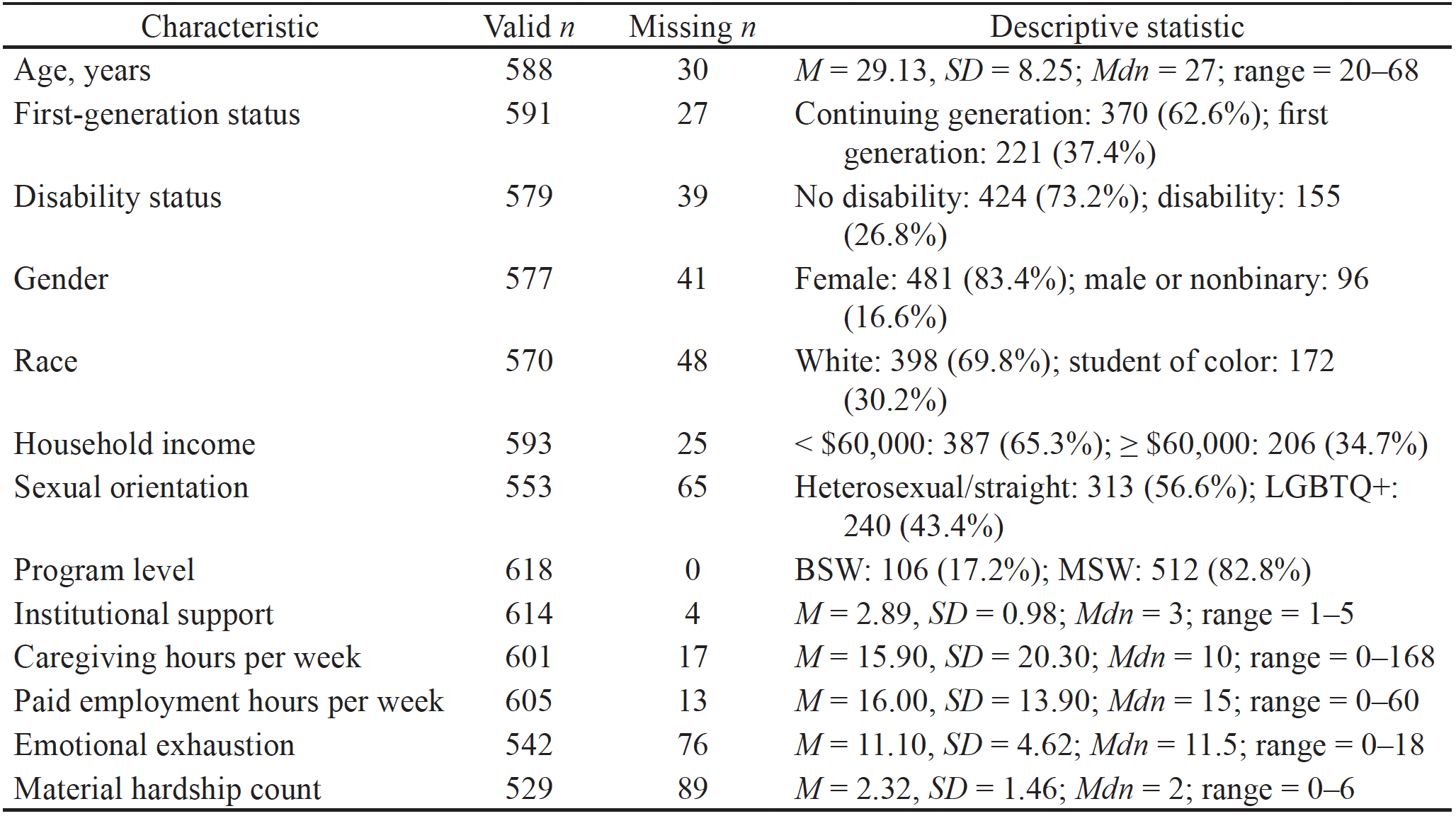
Note. N = 618. Percentages are based on valid responses for each variable. M = mean; Mdn = median; SD = standard deviation.
Prevalence of Academic Disruption
Practicum-related academic disruption was common. As shown in Table 2, 63.3% of students with valid composite data endorsed at least one disruption. Not purchasing required textbooks was the most frequently reported outcome (52.9%), followed by receiving a lower grade in a course (29.3%). Delaying graduation (11.1%), withdrawing from a course (8.0%), dropping out for a semester or more (3.2%), and failing a course (1.7%) were less common.
Table 2
Prevalence of Practicum-Related Academic Disruption
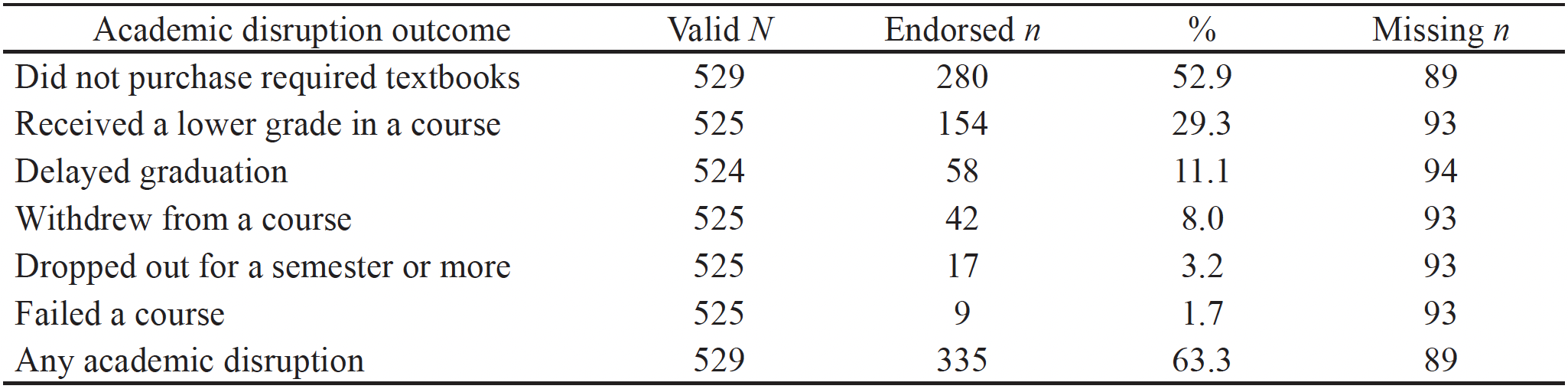
Note. Percentages are based on the valid denominator for each item. Any academic disruption was coded 1 when at least one of the six outcomes was endorsed.
Bivariate Associations with Academic Disruption
Bivariate analyses examined whether student characteristics, practicum context, role demands, emotional exhaustion, and material hardship differed by academic disruption status. As shown in Table 3, academic disruption was significantly associated with disability status, income, and sexual orientation in categorical comparisons. Students with academic disruption also reported significantly higher emotional exhaustion and material hardship than students without academic disruption. Institutional support differed significantly by academic disruption status as well. Age, first-generation status, gender, race, program level, caregiving hours, and paid employment hours were not significantly associated with the composite academic disruption outcome in bivariate analyses.
Table 3
Bivariate Associations with Any Academic Disruption
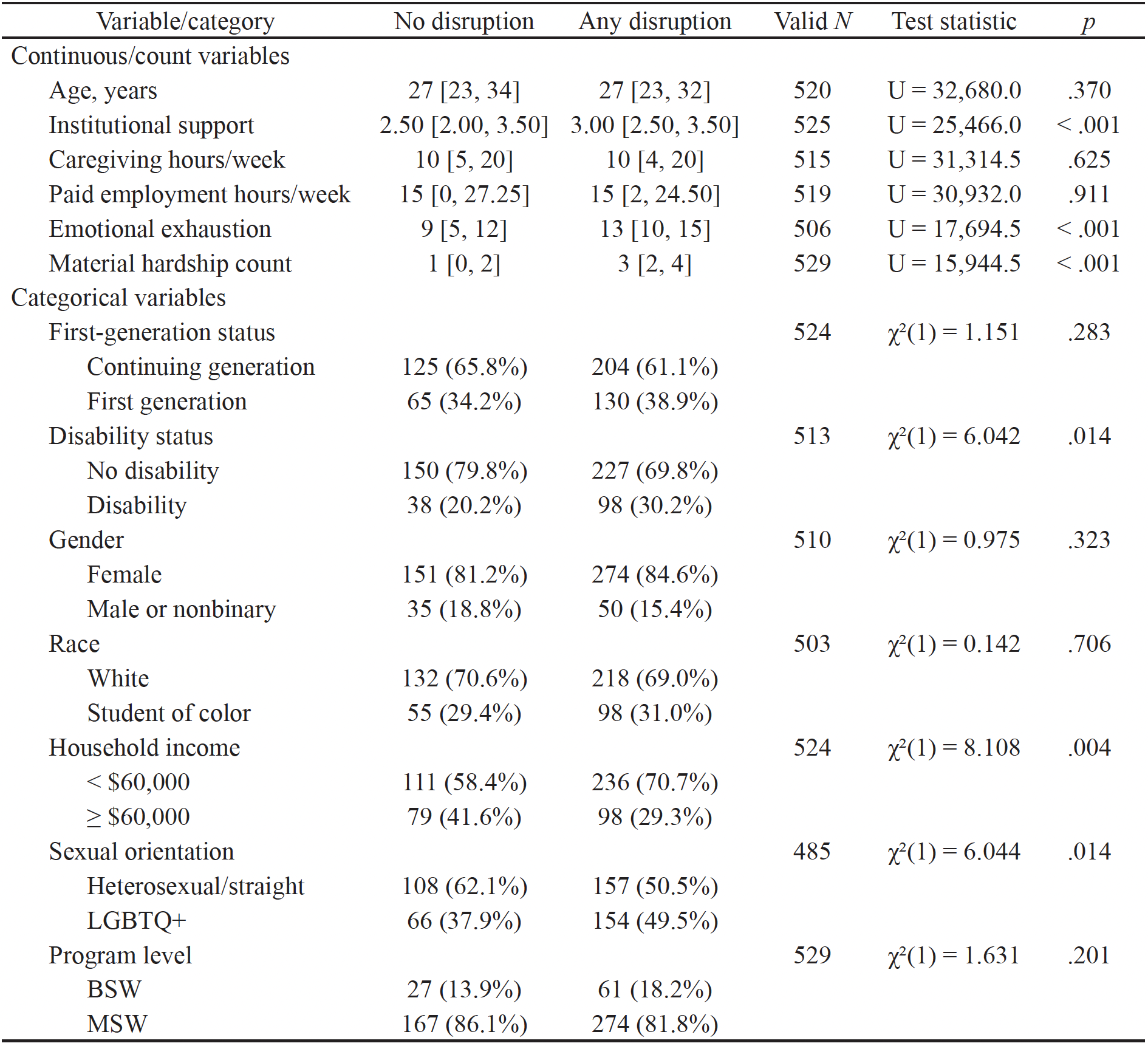
Note. Values for continuous/count variables are Mdn [IQR]; values for categorical variables are n (%) within each academic disruption group. Pairwise available cases were used. IQR = interquartile range; U = Mann–Whitney U statistic.
Primary Hierarchical Logistic Regression
A hierarchical logistic regression examined correlates of any practicum-related academic disruption among 414 complete cases. As shown in Table 4, emotional exhaustion and material hardship were the strongest correlates in the final model. Each one-point increase in emotional exhaustion was associated with 14% higher odds of disruption (AOR = 1.14, 95% CI [1.08, 1.21], p < .001). Each additional material hardship was associated with approximately twice the odds of disruption (AOR = 2.01, 95% CI [1.64, 2.49], p < .001). Compared with female students, male or nonbinary students had lower adjusted odds of disruption (AOR = 0.48, 95% CI [0.25, 0.92], p = .028). Age, first-generation status, disability status, race, income, sexual orientation, program level, institutional support, caregiving hours, and paid employment hours were not statistically significant after all predictors were entered.
Table 4
Hierarchical Logistic Regression for Any Academic Disruption
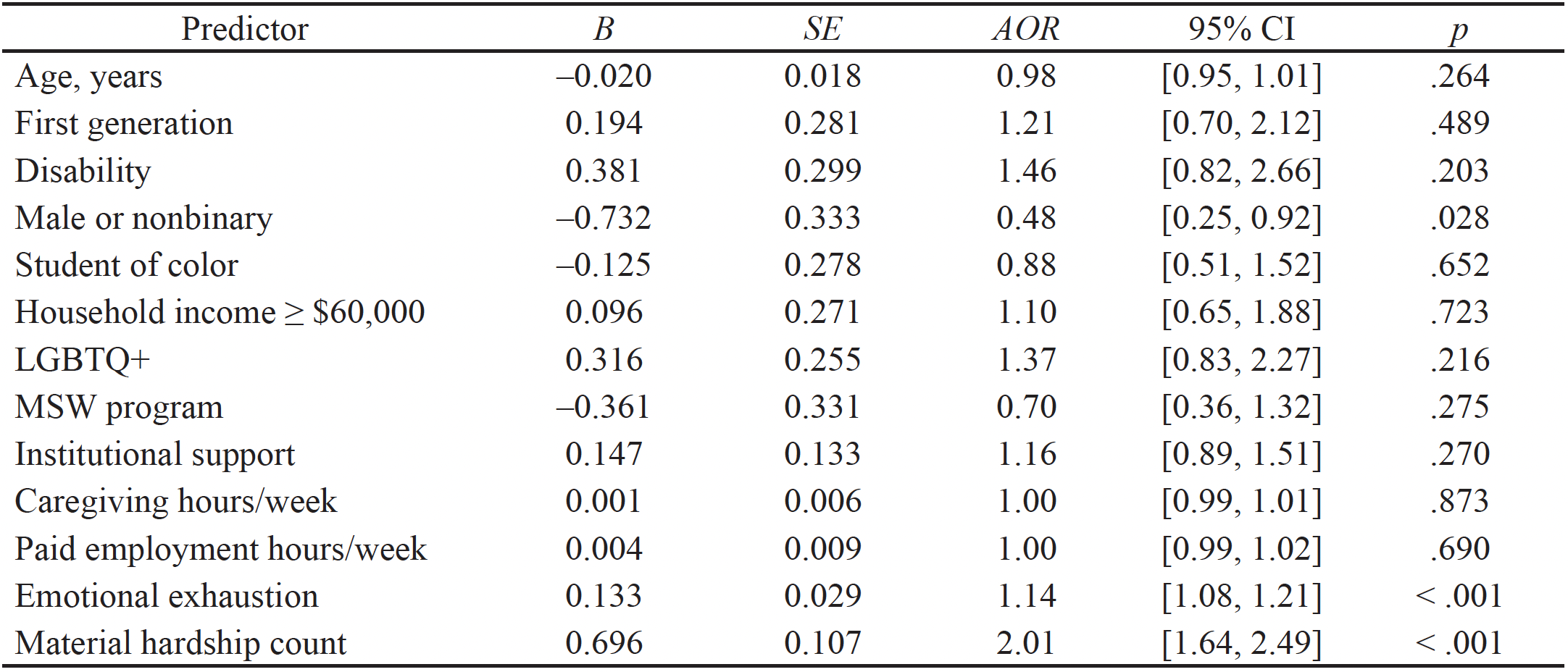
Note. N = 414 complete cases. B = unstandardized logistic regression coefficient; AOR = adjusted odds ratio; CI = confidence interval; SE = standard error. Reference categories were continuing-generation, no disability, female, White, household income < $60,000, heterosexual/straight, and BSW. Overall model: χ²(13) = 123.60, p < .001; Nagelkerke R² = .352; Hosmer–Lemeshow χ²(8) = 10.94, p = .205. At a .50 cutoff, accuracy was 72.7%, sensitivity was 83.4%, specificity was 54.8%, and intercept-only accuracy was 62.6%.
The full hierarchical model was statistically significant (χ²(13) = 123.60, p < .001), and produced a Nagelkerke pseudo-R² of .352. Model calibration was acceptable (Hosmer–Lemeshow χ²(8) = 10.94, p = .205). At a .50 cutoff, the model correctly classified 72.7% of cases, with 83.4% sensitivity and 54.8% specificity; intercept-only accuracy was 62.6%.
Hierarchical Model Fit
Table 5 presents block-by-block model fit. Student background characteristics improved model fit in Block 1, and program/practicum context improved fit in Block 2. Caregiving and paid employment hours did not improve fit in Block 3. Emotional exhaustion improved fit in Block 4, and material hardship produced the largest improvement in Block 5. Nagelkerke pseudo-R² increased from .081 in Block 1 to .352 in the final model.
Table 5
Hierarchical Model Fit
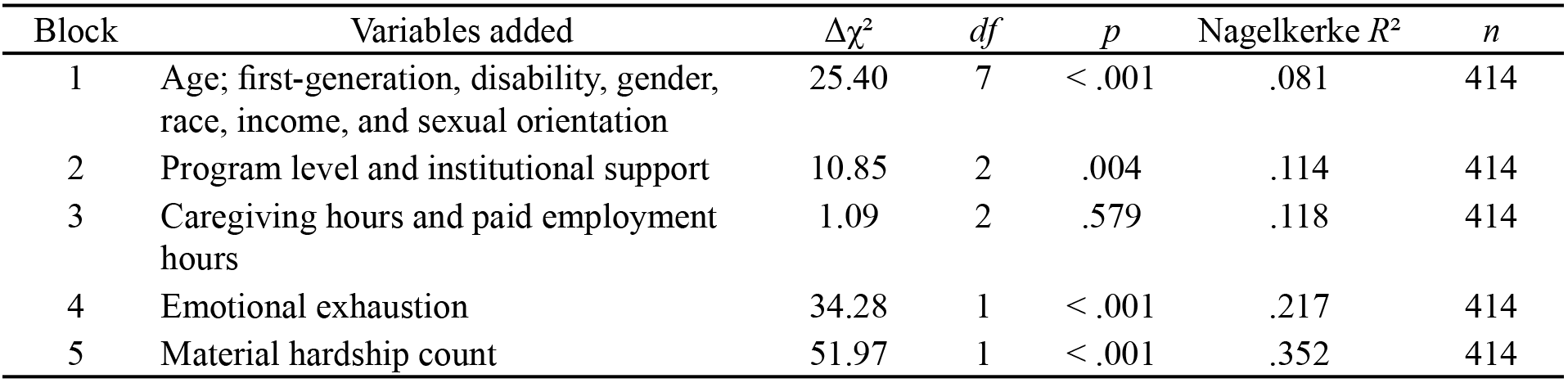
Note. Δχ² values are likelihood-ratio tests comparing each model with the preceding model. Nagelkerke R² values are cumulative.
Secondary Outcome-Specific Logistic Regressions
Because the composite outcome combined academic hardships of varying type and severity, six exploratory logistic regressions examined whether correlates differed across specific academic disruption outcomes. Given the low prevalence of several individual outcomes, these models used a more parsimonious set of theoretically selected predictors: age, first-generation status, disability status, caregiving hours, and paid employment hours.
As shown in Table 6, five of the six exploratory models were statistically significant: not purchasing required textbooks, receiving a lower grade, delaying graduation, withdrawing from a course, and failing a course. The model predicting dropping out for a semester or more was not statistically significant.
Younger age was associated with greater odds of not purchasing required textbooks and receiving a lower grade, and disability status was also associated with receiving a lower grade. Delayed graduation showed the broadest pattern: older age, first-generation status, disability status, and paid employment hours were each associated with higher odds of delay. Course withdrawal was associated with first-generation and disability status.
No predictor reached statistical significance in the stopping-out model. The course-failure model was statistically significant but included only nine events; younger age and disability status were associated with failure, and the estimates should be interpreted cautiously. Collectively, the secondary models indicate that characteristics attenuated in the composite model may still be associated with particular academic consequences.
Table 6
Exploratory Outcome-Specific Logistic Regression Models
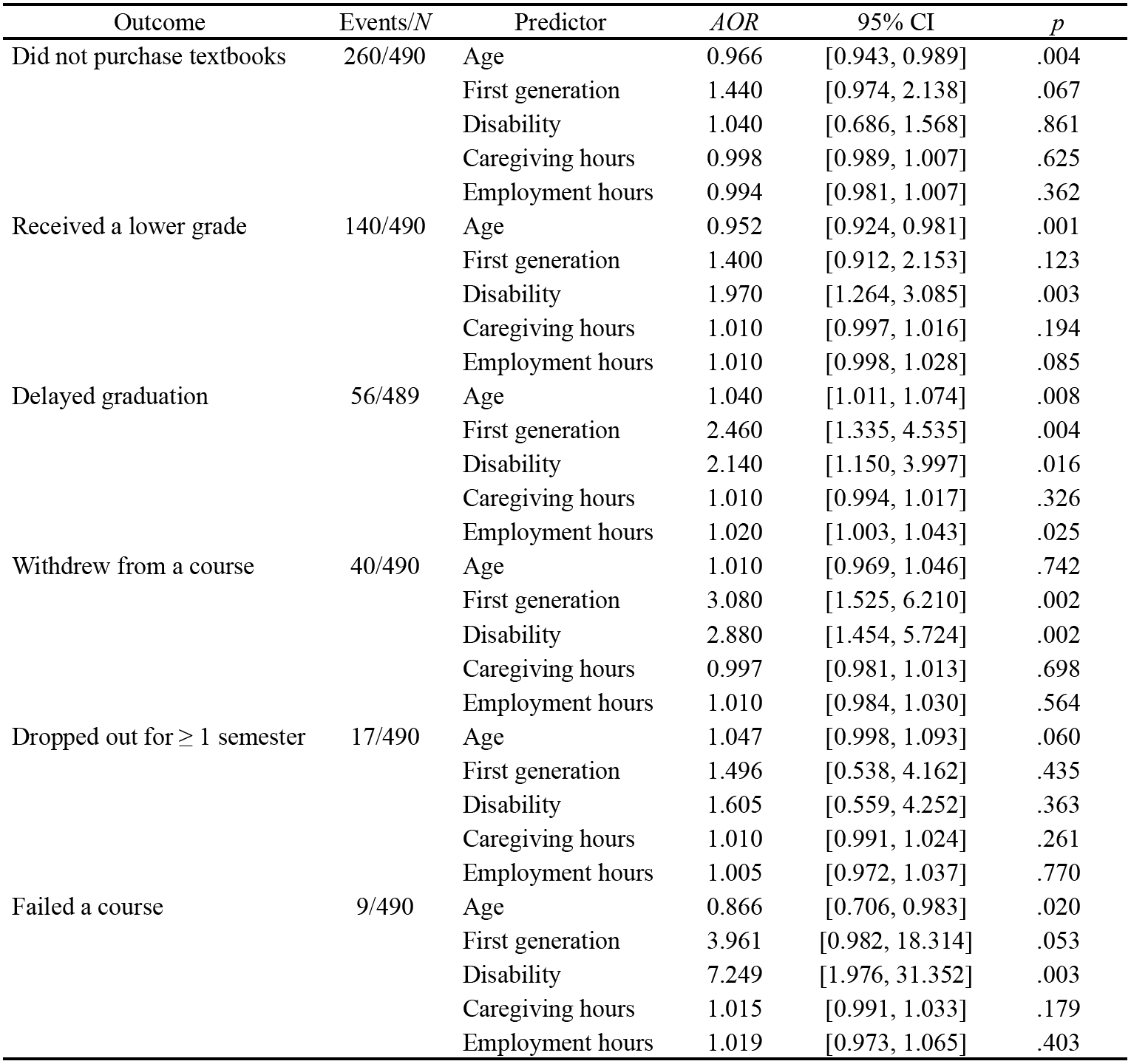
Note. AOR = adjusted odds ratio; CI = confidence interval. Each model included age, first-generation status, disability status, weekly caregiving hours, and weekly paid employment hours. Reference categories were continuing-generation student and no disability. Standard maximum-likelihood logistic regression was used for textbook nonpurchase, lower grade, delayed graduation, and course withdrawal. Firth penalized maximum-likelihood logistic regression with profile penalized-likelihood confidence intervals was used for dropping out (17 events; penalized likelihood-ratio χ²[5] = 9.23, p = .100) and course failure (9 events; penalized likelihood-ratio χ²[5] = 17.72, p = .003). Standard-model fit: textbooks χ²(5) = 12.60, p = .027, R² = .034; lower grade χ²(5) = 21.30, p < .001, R² = .061; delayed graduation χ²(5) = 35.30, p < .001, R² = .137; withdrawal χ²(5) = 19.00, p = .002, R² = .088. R² values are Nagelkerke pseudo-R².
Discussion
This study examined correlates of practicum-related academic disruption among U.S. social work students. Nearly two-thirds (63.3%) reported at least one disruption. Emotional exhaustion and cumulative material hardship were the strongest overall correlates, with each additional material hardship associated with approximately twice the odds of disruption. At the same time, the outcome-specific models showed that age, first-generation status, disability status, and paid employment were associated with particular consequences. Thus, the attenuation of these characteristics in the composite model should not be interpreted as evidence that they are unimportant; rather, their relevance appears to vary by the form of academic disruption.
Material Hardship and Emotional Exhaustion
Cumulative material hardship was closely associated with students’ ability to participate academically during practicum, even after accounting for student characteristics, program and practicum context, role demands, and emotional exhaustion. This finding aligns with evidence that unmet basic needs can undermine academic participation, performance, and persistence (Hope Center, 2021; Joo et al., 2008; Olfert et al., 2023; Terriquez & Gurantz, 2015). In practicum education, food insecurity, course-material costs, debt, and delayed health care may be compounded by unpaid placement hours and reduced opportunities for paid work (Hodge et al., 2021; Johnstone et al., 2016; Morley et al., 2024). Material hardship should therefore be understood as an academic infrastructure issue rather than only a private financial circumstance.
Emotional exhaustion was independently associated with academic disruption, suggesting that the psychosocial conditions of practicum participation also matter. Although the cross-sectional design prevents causal inference, emotional exhaustion may function as a warning indicator of practicum conditions associated with academic risk rather than merely an individual wellness problem. This interpretation is consistent with calls to address burnout through workload, supervision, organizational climate, and structural supports rather than relying solely on students’ self-care (Apgar & Parada, 2022; Beddoe et al., 2024; Smith et al., 2021).
Outcome-Specific Patterns and Equity
The distinction between the composite and item-specific models is conceptually important. The composite identified conditions associated with any disruption, whereas the exploratory models showed that specific consequences had different correlates. Younger age was associated with textbook nonpurchase, lower grades, and course failure, while older age and paid employment hours were associated with delayed graduation. These differences support examining both broad and specific outcomes rather than assuming that academic disruption is a uniform process.
Disability and first-generation status should be understood as institutional equity concerns, but their patterns were not identical. Disability status was associated with lower grades, delayed graduation, course withdrawal, and course failure, whereas first-generation status was associated with delayed graduation and course withdrawal. These findings are consistent with research linking disability-related persistence to lower academic integration, fewer personal resources, and gaps in accommodations or responsive support, and linking first-generation status to reduced access to institutional knowledge and material buffers (Fletcher et al., 2023; Koch et al., 2018; Lombardi et al., 2012; Rußmann et al., 2024). The implication is not that these students are deficient, but that practicum systems may insufficiently anticipate the conditions under which they are expected to succeed.
Paid employment hours were not associated with the broad composite but were associated with delayed graduation. Employment demands may therefore affect course load and time to degree more than all forms of academic hardship equally. Students who must maintain paid work while completing practicum may meet immediate academic demands by reducing course loads or extending their programs because of scheduling conflicts and limited availability for placement hours (Hodge et al., 2021; Johnstone et al., 2016; Joo et al., 2008).
Caregiving hours were not statistically associated with disruption in these models, but this finding should not be interpreted as evidence that caregiving is irrelevant. A weekly-hours measure may not capture the unpredictability, intensity, emotional labor, and competing family obligations that produce role strain and time poverty. More nuanced measures may be needed to identify how caregiving affects academic performance and persistence during practicum. Notably, institutional support was not associated with lower odds of academic disruption. Students reporting disruption perceived somewhat higher support in bivariate comparisons, and the association was nonsignificant after adjustment, which may reflect greater contact with field faculty and supervisors among students already experiencing difficulty, or support that is felt interpersonally without addressing the material conditions associated with disruption.
Implications for Social Work Education
This study reinforces the principle that material supports are academic supports (Hope Center, 2021; Olfert et al., 2023). Programs can treat practicum stipends, emergency grants, course materials, transportation assistance, food aid, health care access, and employment-based practicum options as part of the infrastructure needed for academic participation (Aguilera et al., 2022; Eaton, 2026; Leslie, 2026; Pelech et al., 2009; Smith et al., 2021). Such supports should not be understood as reducing academic or professional rigor; rather, they address material conditions that can prevent students from meeting existing academic and practicum expectations. Material assistance alone, however, is insufficient when practicum structures continue to produce unsustainable psychological pressures (Hodge et al., 2024).
Emotional exhaustion and burnout should also be addressed as structural concerns rather than as indictments of students’ self-care or professional readiness (Apgar & Parada, 2022; Beddoe et al., 2024; National Association of Social Workers, 2021; Prins et al., 2021; Smith et al., 2021). Programs should review learning contracts, practicum manuals, supervision practices, workload expectations, course timing, placement flexibility, and communication between field faculty and host agencies. Individual self-care strategies may be useful, but they cannot substitute for changes to conditions that generate emotional exhaustion. Emotional exhaustion may serve as a warning indicator that students are struggling with the combined demands of practicum, coursework, employment, caregiving, and material hardship.
Targeted supports are needed because specific forms of disruption had distinct correlates. Students at risk of delayed graduation may benefit from early degree-planning conversations, flexible placement scheduling, and financial planning that reduces the need to expand paid employment at the expense of course progression (Hodge et al., 2021; Johnstone et al., 2016; Joo et al., 2008; Leslie, 2026). Students with disabilities may benefit from early accommodation planning that addresses both formal accessibility needs and the variable, interpersonal, and often less structured demands of practicum settings (Koch et al., 2018; Rußmann et al., 2024). First-generation students may benefit from structured advising and mentoring that makes the implicit norms, institutional navigation, and professional expectations of practicum more explicit (Fletcher et al., 2023; Lombardi et al., 2012; Sneyers & De Witte, 2018).
Limitations
Several limitations should be considered. The cross-sectional design prevents causal inference and does not establish whether material hardship or emotional exhaustion preceded academic disruption. All variables were self-reported in the same survey. In addition, material hardship and academic disruption were measured with PFII items sharing a common practicum–financial-impact stem. Their association may therefore partly reflect shared method variance, conceptual proximity, or respondents’ common attribution of both experiences to practicum-related financial strain.
The primary model used complete-case analysis, reducing the analytic sample from 618 to 414. Although Little’s test did not provide evidence against MCAR, a nonsignificant result does not prove that the complete cases were representative of all participants. The reduction in sample size may have lowered precision or introduced selection bias. Logistic regression can be estimated after other missing-data approaches, such as multiple imputation; thus, future analyses should assess whether the findings are robust to alternative missing-data handling.
The academic disruption composite also combined outcomes that varied substantially in severity, and the stopping-out and course-failure models contained few events, producing unstable estimates. Dichotomizing gender, race, income, and sexual orientation obscured within-group heterogeneity, and combining male and nonbinary respondents was especially limiting. Finally, convenience and snowball sampling restrict generalizability beyond students who elected to participate.
Future Research Directions
Future research should examine practicum-related academic disruption longitudinally and with more nuanced measures. Longitudinal studies are needed to establish temporal ordering among material hardship, emotional exhaustion, and later academic outcomes. Larger samples and penalized estimation approaches would improve analysis of rare outcomes such as stopping out and course failure. Future studies should also preserve more detailed demographic categories, measure the quality and unpredictability of caregiving and employment demands, and test the robustness of findings using multiple imputation. Qualitative and intervention studies could clarify how students make decisions about course loads and degree timing and whether stipends, paid placements, emergency aid, flexible practicum models, proactive advising, and enhanced disability supports reduce disruption.
Conclusion
Academic disruption during practicum was both common and heterogeneous. Emotional exhaustion and cumulative material hardship were the strongest overall correlates of any academic disruption, suggesting that students’ academic participation is closely tied to the emotional and material conditions under which they complete practicum. At the same time, exploratory models showed that specific academic consequences were patterned by age, first-generation status, disability status, and paid employment hours. These findings suggest that social work programs should treat practicum-related hardship as both an academic success issue and an equity issue. Reducing material hardship, addressing emotional exhaustion, and developing targeted supports may help students complete practicum without sacrificing their academic progress.
References
Aguilera, N. B., Medley, W. L., Gage, C., & Hutchison, A. (2022). Addressing class in field: Economic justice and unpaid social work practicums. In J. L. Drolet, G. Charles, S. M. McConnell, & M. Bogo (Eds.), Transforming social work field education: New insights from practice research and scholarship (pp. 21–34). University of Calgary Press. https://tinyurl.com/4w9eyz3s
Anderson, K. M. (2025). Safeguarding student well-being: Integrating trauma-informed pedagogy to promote resilience and retention in social work education. Journal of Teaching in Social Work, 45(5), 838–853. https://doi.org/10.1080/08841233.2025.2567245
Apgar, D., & Parada, M. (2022). Missing the mark? Reframing NASW’s ethical mandate for self-care as a social justice issue. Advances in Social Work, 22(3), 876–899. https://doi.org/10.18060/25748
Appedu, S., Elmquist, M., Wertzberger, J., & Birch, S. (2021). Inequitable impacts of textbook costs at a small, private college: Results from a textbook survey at Gettysburg College. Open Praxis, 13(1), 69–87. https://doi.org/10.5944/openpraxis.13.1.1147
Bartley, A., Beddoe, L., Hashemi, L., Rahimi, M., & de Fossard, S. (2025). Social work students in Aotearoa New Zealand: The impacts of financial hardship on mental and social wellbeing. Social Work Education, 44(3), 485–505. https://doi.org/10.1080/02615479.2024.2326540
Beddoe, L., Baker, M., Cox, K., & Ballantyne, N. (2024). Mental health struggles of social work students: Distress, stigma, and perseverance. Qualitative Social Work, 23(5), 813–832. https://doi.org/10.1177/14733250231212413
Council on Social Work Education. (2008). Educational policy and accreditation standards. https://www.cswe.org/sites/default/files/2026-07/2008_EPAS.pdf
Council on Social Work Education. (2022). 2022 educational policy and accreditation standards. https://www.cswe.org/sites/default/files/2026-07/2022_EPAS.pdf
Cox, K., Beddoe, L., & Ide, Y. (2022). Social work student hardship: A review of the literature. Aotearoa New Zealand Social Work, 34(1), 22–35. https://doi.org/10.11157/anzswj-vol34iss1id848
DeCarlo, M. P., Gyourko, J. R., Colquitt, E., Bonilla, P. O., Barbera, R., & Rowe, M. (2025). The price of placement (Part 2): Basic needs and well-being of U.S. social work students in field practicums [Preprint]. SocArXiv. https://osf.io/preprints/socarxiv/e5zft_v1
Eaton, A. D. (2026). Current issues with social work field education and ideas for change. Social Work Education, 45(1), 153–162. https://doi.org/10.1080/02615479.2025.2484360
Farr, P. (2024). End the exploitation of social work student interns! Journal of Social Work Education, 60(4), 489–496. https://doi.org/10.1080/10437797.2024.2354774
Fletcher, A. C., Jensen, M., & Vrshek-Schallhorn, S. (2023). Novel perspectives on adversity exposure, stress responding, and academic retention among first- and continuing-generation students. Emerging Adulthood, 11(1), 175–189. https://doi.org/10.1177/21676968221089087
Florida Virtual Campus. (2019). 2018 student textbook and course materials survey. https://tinyurl.com/3j95979t
Gyourko, J. R., Silver, J., & Greeson, J. K. P. (2024). Financial and psychosocial challenges reported by social work students: Findings from a cross-sectional online survey. Transformative Social Work, 2(2), 1–31. https://doi.org/10.55016/ojs/tsw.v2i2.79851
Hodge, L., McIntyre, H., Morley, C., Briese, J., Clarke, J., & Kostecki, T. (2024). “My anxiety was through the roof”: The gendered nature of financial stress and its impact on mental health and well-being for women when undertaking social work placements. Affilia, 39(3), 499–516. https://doi.org/10.1177/08861099231225228
Hodge, L., Oke, N., McIntyre, H., & Turner, S. (2021). Lengthy unpaid placements in social work: Exploring the impacts on student wellbeing. Social Work Education, 40(6), 787–802. https://doi.org/10.1080/02615479.2020.1736542
Hope Center for College, Community, and Justice. (2021). The Hope Center survey 2021: Basic needs insecurity during the ongoing pandemic. https://tinyurl.com/4tdenuvz
Johnstone, E., Brough, M., Crane, P., Marston, G., & Correa-Velez, I. (2016). Field placement and the impact of financial stress on social work and human service students. Australian Social Work, 69(4), 481–494. https://doi.org/10.1080/0312407X.2016.1181769
Joo, S., Durband, D. B., & Grable, J. (2008). The academic impact of financial stress on college students. Journal of College Student Retention: Research, Theory & Practice, 10(3), 287–305. https://doi.org/10.2190/CS.10.3.c
Koch, L. C., Lo, W., Mamiseishvili, K., Lee, D., & Hill, J. (2018). The effect of learning disabilities, attention deficit hyperactivity disorder, and psychiatric disabilities on three-year persistence outcomes at four-year higher education institutions. Journal of Vocational Rehabilitation, 48(3), 359–367. https://doi.org/10.3233/JVR-180944
Leslie, A. F. (2026). Paid placements in social work: Addressing inequity and student well-being. Families in Society, 107(2), 705–714. https://doi.org/10.1177/10443894241310635
Little, R. J. A. (1988). A test of missing completely at random for multivariate data with missing values. Journal of the American Statistical Association, 83(404), 1198–1202. https://doi.org/10.1080/01621459.1988.10478722
Lombardi, A. R., Murray, C., & Gerdes, H. (2012). Academic performance of first-generation college students with disabilities. Journal of College Student Development, 53(6), 811–826. https://doi.org/10.1353/csd.2012.0082
Martinez, S. M., Esaryk, E. E., Moffat, L., & Ritchie, L. (2021). Redefining basic needs for higher education: It’s more than minimal food and housing according to California university students. American Journal of Health Promotion, 35(6), 818–834. https://doi.org/10.1177/0890117121992295
Maslach, C., & Jackson, S. E. (1981). The measurement of experienced burnout. Journal of Organizational Behavior, 2(2), 99–113. https://doi.org/10.1002/job.4030020205
Maslach, C., Jackson, S. E., & Leiter, M. P. (1996). The Maslach Burnout Inventory (3rd ed.). Consulting Psychologists Press.
Morley, C., Hodge, L., Clarke, J., McIntyre, H., Mays, J., Briese, J., & Kostecki, T. (2024). “This unpaid placement makes you poor”: Australian social work students’ experiences of the financial burden of field education. Social Work Education, 43(4), 1039–1057. https://doi.org/10.1080/02615479.2022.2161507
National Association of Social Workers. (2021). NASW code of ethics. https://www.socialworkers.org/About/Ethics/Code-of-Ethics
Olfert, M. D., Hagedorn-Hatfield, R. L., Houghtaling, B., Esquivel, M. K., Hood, L. B., MacNell, L., Soldavini, J., Berner, M., Savoie Roskos, M. R., Hingle, M. D., Mann, G. R., Waity, J. F., Knol, L. L., Walsh, J., Kern-Lyons, V., Paul, C., Pearson, K., Goetz, J. R., Spence, M., … Coleman, P. (2023). Struggling with the basics: Food and housing insecurity among college students across twenty-two colleges and universities. Journal of American College Health, 71(8), 2518–2529. https://doi.org/10.1080/07448481.2021.1978456
Pelech, W. J., Barlow, C., Badry, D. E., & Elliot, G. (2009). Challenging traditions: The field education experiences of students in workplace practica. Social Work Education, 28(7), 737–749. https://doi.org/10.1080/02615470802492031
Prins, S. J., McKetta, S., Platt, J., Muntaner, C., Keyes, K. M., & Bates, L. M. (2021). The serpent of their agonies: Exploitation as structural determinant of mental illness. Epidemiology, 32(2), 303–310. https://doi.org/10.1097/EDE.0000000000001304
Rußmann, M., Netz, N., & Lörz, M. (2024). Dropout intent of students with disabilities. Higher Education, 88(1), 183–208. https://doi.org/10.1007/s10734-023-01111-y
Shulman, L. S. (2005). Signature pedagogies in the professions. Daedalus, 134(3), 52–59. https://doi.org/10.1162/0011526054622015
Smith, D. S., Goins, A. M., & Savani, S. (2021). A look in the mirror: Unveiling human rights issues within social work education. Journal of Human Rights and Social Work, 6(1), 21–31. https://doi.org/10.1007/s41134-020-00157-7
Sneyers, E., & De Witte, K. (2018). Interventions in higher education and their effect on student success: A meta-analysis. Educational Review, 70(2), 208–228. https://doi.org/10.1080/00131911.2017.1300874
Teakel, S., Linden, K., & Bradshaw, E. R. (2025). Empowering first-year social work students: Improving student success and retention with a discipline-specific tutor to provide feedforward on assessments. Social Work Education, 44(3), 466–484. https://doi.org/10.1080/02615479.2024.2324917
Terriquez, V., & Gurantz, O. (2015). Financial challenges in emerging adulthood and students’ decisions to stop out of college. Emerging Adulthood, 3(3), 204–214. https://doi.org/10.1177/2167696814550684
Unrau, Y. A., Sherwood, D. A., & Postema, C. L. (2020). Financial and educational hardships experienced by BSW and MSW students during their programs of study. Journal of Social Work Education, 56(3), 456–473. https://doi.org/10.1080/10437797.2019.1656687
Wang, A., Duan, Y., Norton, P. G., Leiter, M. P., & Estabrooks, C. A. (2024). Validation of the Maslach Burnout Inventory-General Survey 9-item short version: Psychometric properties and measurement invariance across age, gender, and continent. Frontiers in Psychology, 15, 1439470. https://doi.org/10.3389/fpsyg.2024.1439470