The Anne and Henry Zarrow School of Social Work at the University of Oklahoma continues to explore and investigate the best techniques and strategies for deploying students into community-based agencies to fulfill their practicum course requirements. The University of Oklahoma is located in the midwestern region of the United States, and the School of Social Work is located on two brick-and-mortar campuses and also offers an online program, with a combined annual enrollment of more than 850 students. Students are placed for practicum in an array of professional agencies in all community settings across the state, nation, and world. The practicum program is staffed by a director of field education, field education coordinators, and faculty liaisons, all of whom are faculty of the University and social work professionals. These social work faculty members have extensive professional experience and share a core belief that the safety of students and clients is a crucial priority. A current teaching strategy and novel approach—instituting a comprehensive safety module and home-based safety simulation as required activities for all foundation-year Master of Social Work (MSW) students, embedded within their first practicum course of the MSW program—was born from this prioritization.
Literature Review
For many students enrolled in social work educational programs, a practicum placement may be their first professional experience. Practicum placement typically refers to an agency where a social work student is placed for the duration of their practicum experience, and where they accrue practicum hours and demonstrate required skills and behaviors (Bogo, 2015; Council on Social Work Education [CSWE], 2022; Shockley & Baskind, 2014). In well-planned practicum placements, students may be exposed to the potential hazards faced by the social work profession (Lord, 2024; Wood & Moylan, 2017). “Workplace safety” can describe a myriad of safety-related topics that impact the health and wellness of employees, including but not limited to environmental hazards, chemical exposures, blood-borne pathogens, inclement weather, poor working conditions, and acts of violence in the workplace (Elliott, 2020; U.S. Department of Labor Occupational Safety and Health Administration [OSHA], 2015).
Regardless of occupation or employment setting, safety considerations are always present in every circumstance and environment. OSHA lists social service workers as one of the professional groups at elevated risk of being on the receiving end of acts of violence in the workplace (OSHA, 2015). According to the U.S. Bureau of Labor Statistics, “The healthcare and social service industries experience the highest rates of injuries caused by workplace violence and are five times as likely to suffer a workplace violence injury than workers overall” (U.S. Bureau of Labor Statistics, 2020). The nature of social work employment settings and activities, specifically the potential for charged emotional situations, mental unwellness of highly traumatized clients, and the high volume of home-based and community-based services being provided in uncontrolled environments, significantly contributes to social work professionals being more vulnerable to workplace violence (OSHA, 2024; Lord, 2024; Wey, 2016).
In 2013, the National Association of Social Workers (NASW) published safety guidelines for social workers to promote safety practices (NASW, 2013). These guidelines directed schools of social work on how to ensure their courses and field education programs promote safety within the profession. Within the guidelines are three standards that address the issue of safety for schools of social work.
Standard 2 promotes prevention activities, including orientations and trainings for staff, in order to minimize the possibility of future violent events occurring by using discussion as a tool to prepare social workers for a future event and to explore solutions for preventing a reoccurrence. Standard 10 advises that safety training should occur on a yearly basis, partnered with case supervision and consultation as needed. Standard 11 advances the safety of social work students by ensuring they are placed in vetted practicum settings where field instructors have been properly and adequately trained in the safe practices within their setting (NASW, 2013).
NASW is concerned not only with the safety of professional social workers but also with that of social work students. Schools of social work and field practicum agencies both should include safety preparations as part of their orientations, so students are aware of safety hazards and how to navigate unsafe situations (NASW, 2013).
In 2021, the NASW Code of Ethics was revised to include self-care as a tool to help social workers maintain safety. Highlights included the use of self-care at various levels due to the increasingly demanding nature of social work (NASW, 2021). Social workers and students are at a higher risk of experiencing psychological and emotional harm through working with high-risk clients (Harr & Moore, 2011). Although both are indirect forms of trauma, secondary trauma and vicarious trauma can have damaging effects on the mental wellness of social workers and students and hinder their ability to perform (Didham et al., 2011). Social workers and social work students are also more likely to experience compassion fatigue, i.e., reduced empathy and ability for support due to repeated second-hand trauma (Adams et al., 2006; Lewis & King, 2019).
Social work educational programs can provide instruction that increases awareness, informs decision-making, and promotes critical thinking skills and self-care. However, practicum agencies must provide agency-specific environmental and protocol-specific training to their individual students. Wood and Moylan (2017) found that, at the university level, out of a sample of 258 social work field directors in the college or university setting, only 12% of Bachelor of Social Work (BSW) and Master of Social Work (MSW) programs had a formal written policy on student safety. At the agency level, a study by Zelnick et al. (2013) evaluating compliance with Occupational Safety and Health Administration (OSHA) guidelines found that only half of the mental health agencies included complied with them.
One tool commonly used as a method of advancing practice in educational settings is the use of simulation with standardized clients (SCs). High-fidelity simulations were first used in medical education by Howard Barrows in the 1960s and have since been used in a variety of disciplines, including social work (Badger & MacNeil, 2002; Bogo et al., 2014; Forgey et al., 2013). SCs are not necessarily social work professionals but are thoroughly trained to act as specific patients or clients and to recreate medical, psychological, and/or psychosocial symptoms realistically for students. Simulations provide students with opportunities to practice skills they have learned from their courses with clients in a more realistic, yet controlled, environment (Badger & MacNeil, 2002; Bogo, et al., 2014; Forgey, et al., 2013). Other studies have noted that students experience positive benefits from these exercises (Bragg, et al, 2020; Lattas, et al, 2025).
Safety and Risk Management Training Overview
At the University of Oklahoma’s School of Social Work, a supplemental safety and awareness training and an accompanying simulation were developed and added to the Practicum 1 course in response to social work field education program faculty concerns and practicum partner requests regarding the need for MSW students to have safety preparation and training prior to entering their practicum placement. Students participate in synchronous didactic training and discussion, asynchronous module completion, and a safety and awareness simulation.
Recognizing potentially unsafe situations, identifying environmental hazards, utilizing skills to prevent dangerous situations in practicum, practicing awareness in safety prevention, and applying de-escalation techniques are several of the topics covered throughout the supplemental Safety Awareness and Risk Management Training module. Students are introduced to the training through lectures, class discussion, and a peer-to-peer activity. Objectives of this training include introducing students to safety awareness as prevention and early intervention, prioritizing an understanding of safety complexities, and equipping them with strategies to navigate safety concerns.
Following completion of the knowledge-acquisition phase of the training, students are introduced to high-fidelity simulation. The goal of the simulation is to increase students’ confidence in assessing the safety of both the client and the social work student (self) while in a home environment. A home environment was strategically selected as the backdrop for the simulation, since a high percentage of our students were and still are engaged in community-based and home-based environments during their practicum placements. In 2015, the OU-Tulsa Simulation Center opened with a fully functioning apartment setup that was used for the early deployment of this curriculum. In the last few years, the school has expanded the simulation to all of its campuses through the use of web-based technology such as Zoom.
Students are provided a client scenario to review prior to beginning the simulated experience. The cases have been developed by our faculty based on their professional experiences. The presenting problem statement provided to students explains why the client needs a home-based visit, and includes only necessary information. During the recorded interaction, the student assesses the client’s and their own safety and develops a mutually agreed-upon plan with the client. The program made the decision to invest in simulation 10+ years ago, and was able to acquire funding at that time. For programs presented with limited resources, a theater-style simulation or a structured role-play activity could be used.
Preparation for the simulations begins during the first week of the course, when students are introduced to the concept of simulation following didactic safety awareness content. Students are informed about the goals of the simulation, expectations during the experience, and feedback and reflective processes following the event. Prior to participating, students are provided with additional preparation on the day of the simulations through expanded logistical information. The simulation room and standardized clients are prepped for the interaction with the student. Standardized clients—community members hired and trained by our simulation center—are instructed to appear fatigued, dress in comfortable, slightly unkempt clothes, and portray a lack of motivation to watch television, read, stay engaged in conversation, cook, or clean. The simulated home environment incorporates various environmental hazard props, including food wrappers, plastic cups, pill bottles, liquor bottles, plastic bugs, chemicals, fall hazards, and fire hazards. To ensure that no student has the advantage of knowing the specific environment prior to the simulation, the room is modified randomly between student experiences to incorporate different props reflective of a variety of safety concerns. The experiential differences provide for elevated peer learning when the group debriefings occur with the students and faculty after the simulation.
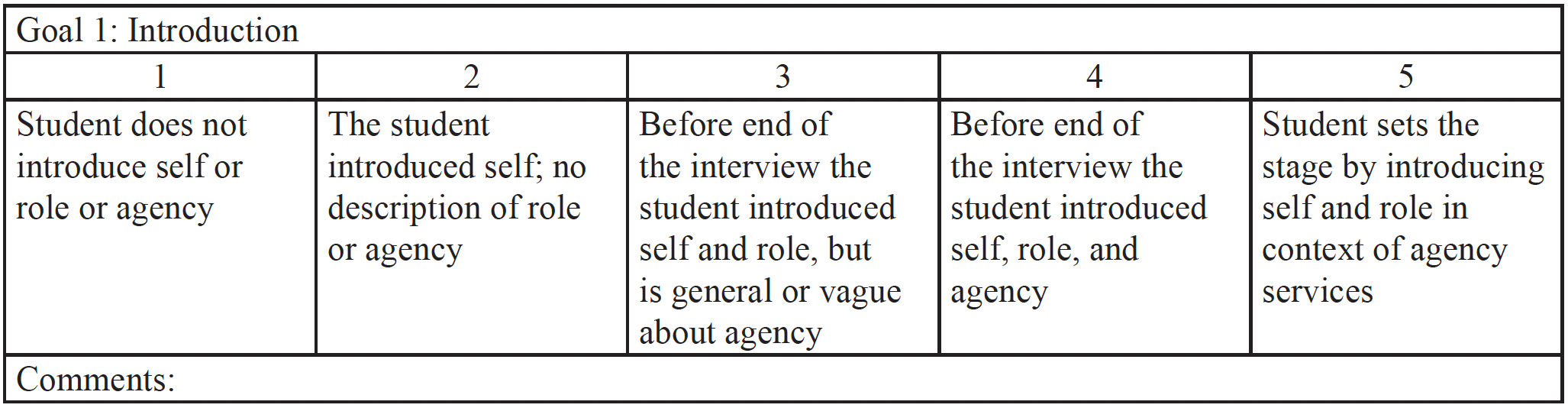
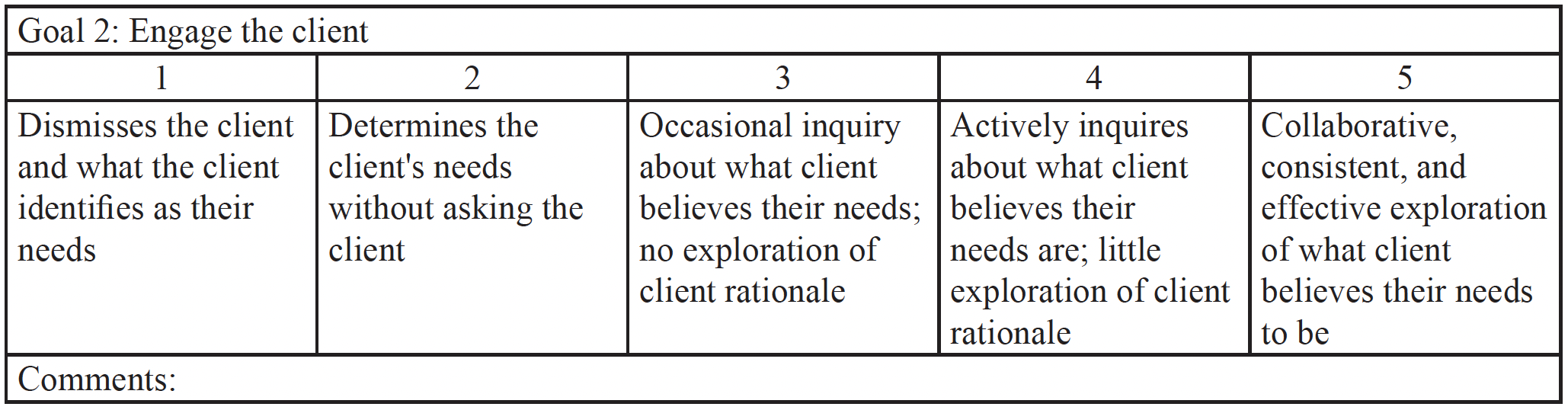
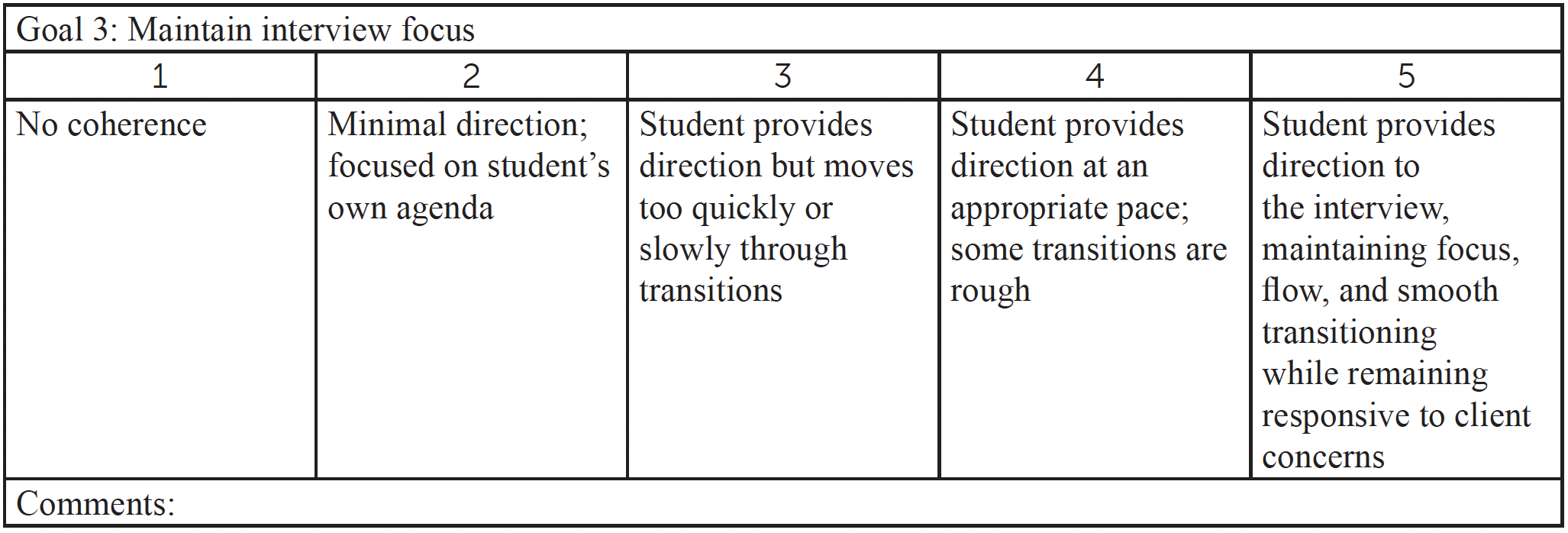
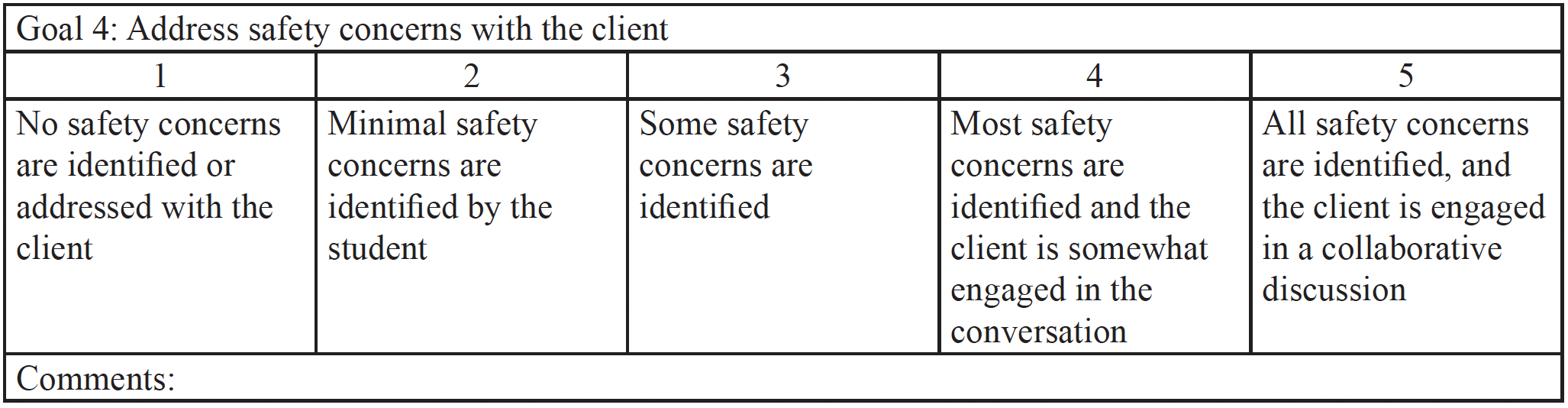
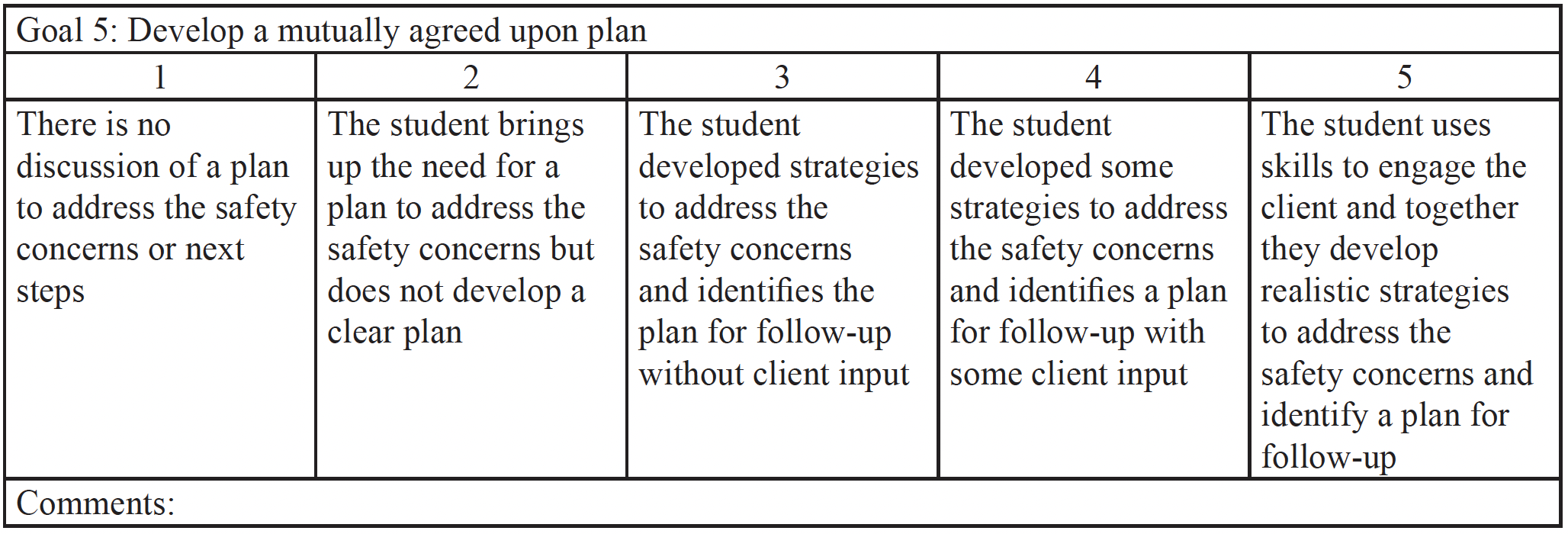
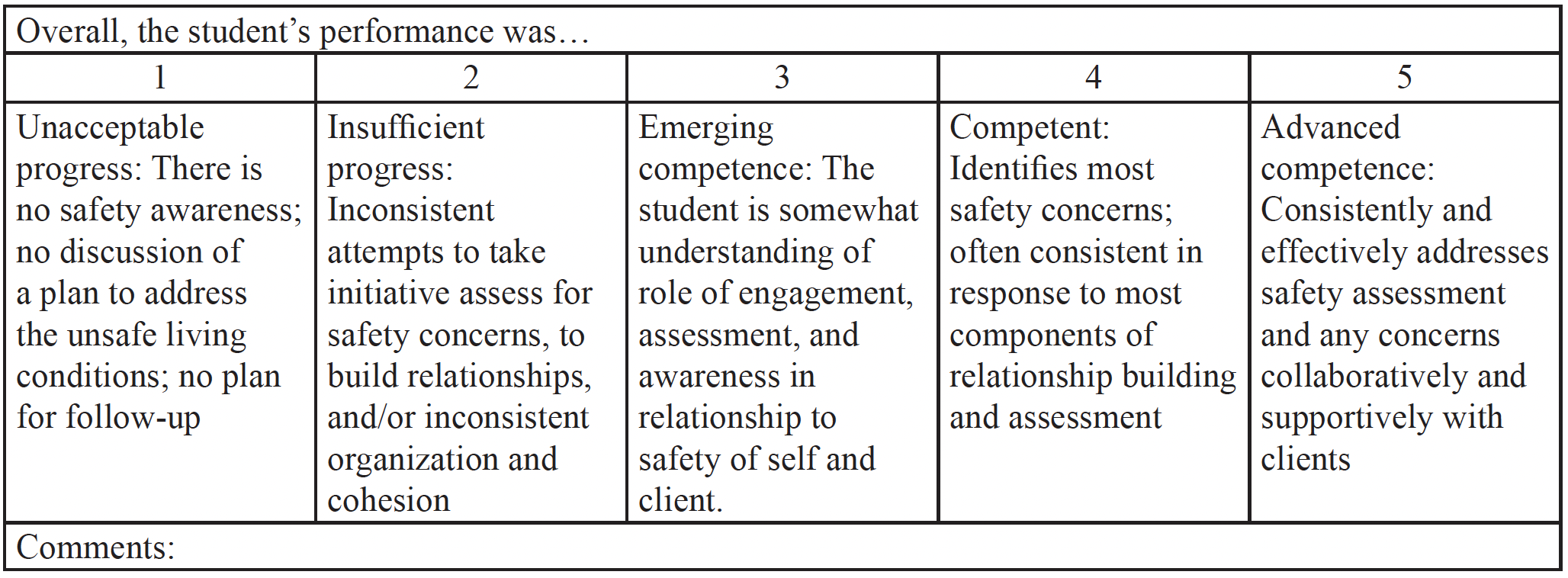
Feedback is provided to students in multiple ways. Students observe each other’s simulations in real time and provide feedback after each simulation. Faculty lead students in small-group debriefing after the event and again during a large-group meeting. During this debriefing time, faculty process with students the students’ initial feelings about the experience, the difficulties and successes they noted for both the client and themselves, what they would have done differently and why, and any other observations they had while engaging in the simulation. Students are challenged to identify their learning achievements and the most valuable things they are taking away from the encounter. Faculty encourage students to share their simulation video recordings with their assigned field instructors for additional observations and feedback during the practicum. Faculty provide students with a completed rubric, as written feedback is essential in the evaluative process. (See Appendix.)
The rubric is used to provide written feedback on the student’s performance in five key areas: professional communication, engagement skills, ability to assess for safety concerns, basic interviewing skills, and ability to develop a plan to address the concerns in a collaborative and respectful manner.
Discussion
Preventive impacts can be difficult to measure, as the end goal is to prevent undesired incidents from ever occurring. It is impossible to track how many incidents are truly prevented. Acquisition of knowledge is measured through a quiz administered to students. The student scores indicate that students understand the complexities of safety and the use of de-escalation techniques following completion of the module and simulation experience (Bragg et al., 2020). During the simulation, faculty complete a rubric for each experience, and students have consistently demonstrated emerging competence. Anecdotally, several students, field partners, and alumni have shared experiences in which they relied on the knowledge and skills first introduced in this training to safely navigate situations that could have resulted in violence and/or injury. This feedback has included everything from field instructors reporting that students are better prepared and less nervous than those who have not completed the content before entering home environments, to a student account detailing how they safely removed themselves and the field instructor from a potentially life-threatening situation. One student noted that
Prior to participating in the Home Assessment and Interview Simulation, I had never done a home visit. Getting the opportunity to practice in a simulated environment helped me gain confidence in the skills taught during the Safety Awareness and Risk Management Training. It was also an opportunity to be okay with making mistakes and learning from them. Additionally, I was able to receive real-time feedback from the simulated client, field faculty, and peers on things I did well and on ways to improve in the future.
Conclusion
Safety for social work students must be a top priority from a university and agency perspective. Students are a vulnerable population, and risks become heightened as they move into internships and practicum placements. As undergraduate and graduate social work students move from more controlled university-based learning environments to agency and community-based environments where there are more interactions with clients, crises, and potential for expanded safety concerns, it is imperative that field education programs ensure basic, broad, and supplemental safety training that includes awareness strategies and practices as prevention.
University-based programs must identify ways to support practicum agencies in the individualized development of more thorough and specific agency-based safety training that includes familiarization with policies and practices promoting practicum student, agency, and client safety. Access to safety training must be included in both social work education and within community-based agencies where social work resides, to best prepare students for any safety concerns that may arise in their specific practicum experience and their future work as professional social workers. Social work students are required to meet the demands of their practicum experience and be able to navigate the diverse landscape of safety pitfalls. Their success heavily relies on oversight and management from university-based faculty and/or staff, and on-site supervision of the development and demonstration of safety skills, including self-care practices.
Lastly, schools of social work need to embrace increased educational responsibility and engage in more research on the components of promoting safety as it relates to the profession. These efforts should include more research focused on safety practices from the viewpoints of students, professionals, agency stakeholders and clients, and dissemination of more information to inform best practices for teaching and promoting safety skill development among students, professionals, agencies, and communities.
We know our professionals are at increased risk and that our world is evolving and ever changing. As educators, we have a responsibility to track trends, evaluate current practices and curriculum, and ensure that the needs of students, clients, and the profession are successfully and safely met.
References
Adams, R. E., Boscarino, J. A., & Figley, C. R. (2006). Compassion fatigue and psychological distress among social workers: A validation study. The American Journal of Orthopsychiatry, 76(1), 103–108. https://doi.org/10.1037/0002-9432.76.1.103
Badger, L. W., & MacNeil, G. (2002). Standardized clients in the classroom: A novel instructional technique for social work educators. Research on Social Work Practice, 12(3), 364–374. https://doi.org/10.1177/1049731502012003002
Bogo, M. (2015). Field education for clinical social work practice: Best practices and contemporary challenges. Clinical Social Work Journal, 43(3), 317–324. https://doi.org/10.1007/s10615-015-0526-5
Bogo, M., Rawlings, M., Katz, E., & Logie, C. (2014). Using simulation in assessment and teaching: OSCE adapted for social work. CSWE Press.
Bragg, J. E., Adamson, T., McBride, R., Miller-Cribbs, J., Nay, E. D. E., Munoz, R. T., & Howell, D. (2020). Preparing students for field education using innovative field labs and social simulation. Field Educator, 10(2). https://tinyurl.com/2kxdwmkz
Council on Social Work Education. (2022). 2022 Educational policy and accreditation standards. https://www.cswe.org/sites/default/files/2026-07/2022_EPAS.pdf
Didham, S., Dromgole, L., Csiernik, R., Karley, M. L., & Hurley, D. (2011). Trauma exposure and the social work practicum. Journal of Teaching in Social Work, 31(5), 523–537. https://doi.org/10.1080/08841233.2011.615261
Elliott, K. S. (2020). Influencing workplace safety through educational training. Midwest Quarterly, 61(3), 360–368.
Forgey, M. A., Badger, L., Gilbert, T., & Hansen, J. (2013). Using standardized clients to train social workers in intimate partner violence assessment. Journal of Social Work Education, 49(2), 292–306. https://doi.org/10.1080/10437797.2013.768482
Harr, C. R., & Moore, B. (2011). Compassion fatigue among social work students in field placements. Journal of Teaching in Social Work, 31(3), 350–363. https://tinyurl.com/bdwkpzs8
Lattas, D., Powell, Z., Adams, B., & Ross, R. (2025). Exploring de-escalation through simulation-based education in U.S. and Australian social work. Studies in Clinical Social Work: Transforming Practice, Education and Research, 95(3-4), 575–597. https://doi.org/10.1080/28376811.2025.2534560
Lewis, M. L., & King, D. M. (2019). Teaching self-care: The utilization of self-care in social work practicum to prevent compassion fatigue, burnout, and vicarious trauma. Journal of Human Behavior in the Social Environment, 29(1), 96–106. https://doi.org/10.1080/10911359.2018.1482482
Lord, S. A. (2024). Learning the hard way in clinical internships in social work and psychology: Lessons for safety, boundary-setting, and deepening the practicum experience. Routledge. https://doi.org/10.4324/9781003453475
National Association of Social Workers. (2013). Guidelines for social work safety in the workplace. https://tinyurl.com/y5bwz5vc
National Association of Social Workers. (2021). NASW code of ethics. https://tinyurl.com/newxet2f
Shockley, C., & Baskind, F. R. (2014). Social work education in the United States: Beyond boundaries. In C. Noble, H. Strauss, & B. Littlechild (Eds.), Global social work: Crossing borders, blurring boundaries (pp. 185–198). Sydney University Press. https://doi.org/10.2307/j.ctv1fxm2q.17
U.S. Bureau of Labor Statistics. (April, 2020). Workplace violence in healthcare, 2018. https://tinyurl.com/4svb3vrf
U.S. Department of Labor Occupational Safety and Health Administration (2015). Guide to preventing workplace violence for healthcare and social service workers. https://www.osha.gov/Publications/osha3148.pdf
U.S. Department of Labor Occupational Safety and Health Administration (2024). OSHA fact sheet: Workplace violence. https://tinyurl.com/45y4k9y8
Wey, S. A. (2016). Healthcare and social service settings in OSHA’s crosshairs. Florida Bar Journal, 90(5), 42–45. https://tinyurl.com/bdhf6yx4
Wood, L., & Moylan, C. (2017). “No one talked about it”: Social work field placements and sexual harassment. Journal of Social Work Education, 53(4), 714–726. https://dx.doi.org/10.1080/10437797.2017.1283270
Zelnick, J. R., Slayter, E., Flanzbaum, B., Butler, N. G., Domingo, B., Perlstein, J., & Trust, C. (2013). Part of the job? Workplace violence in Massachusetts social service agencies. Health & Social Work, 38(2), 75–85. https://doi.org/10.1093/hsw/hlt007
Appendix
Rubric for Safety Simulation